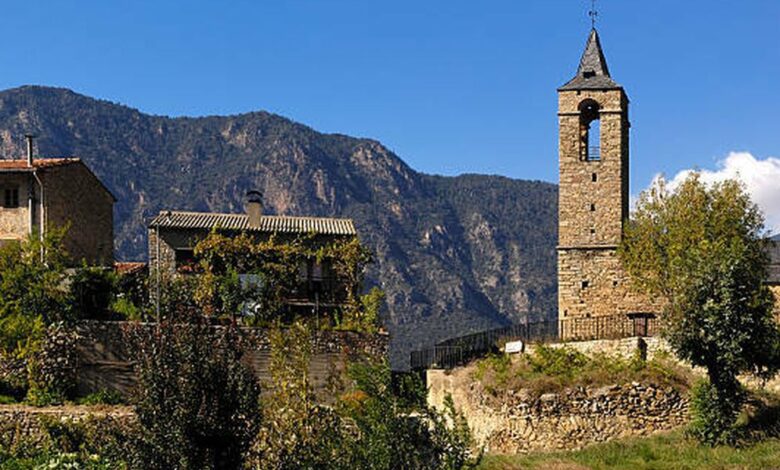
When the bustle of coastal towns becomes exhausting and your soul longs for peace and authenticity, the roads naturally lead north, right to the heart of the Catalan mountains. There, where the Segre River carves its path at the foot of the majestic Cadí range, lies a small village nestled among emerald valleys—a place that seems to have stepped out of the pages of an old book. This is Arsèguel, a settlement in the comarca of Alt Urgell, which has managed to preserve its unique character through the centuries and become a true cultural phenomenon, all while avoiding the intrusive attention of mass tourism.
A melody born in the mountains
What sets this place apart from hundreds of other picturesque Pyrenean villages is its unique soundtrack. Arsèguel is rightly called the Catalan capital of the diatonic accordion. While this instrument has been almost forgotten elsewhere, here it is not only remembered—it is a way of life. The local residents, with remarkable persistence and passion, have revived the tradition of playing the accordion, and now its shimmering, slightly nostalgic melodies fill the entire area. The highlight of this musical enthusiasm is the annual Meeting of Pyrenean Accordionists, held in July. This is the oldest folk music festival in these parts and, since the late 1990s, has been part of the prestigious European Route of Traditional Music Festivals supported by the European Union. The event encompasses not only Arsèguel but also neighboring La Seu d’Urgell and Castellbò, turning the region into a single space for living art. To truly understand the importance of this instrument to local identity, be sure to visit the Accordion Museum, which houses an impressive collection that tells the story of the extraordinary bond between people, music, and the mountains.
Stone pages of history
A stroll through Arsèguel is a journey into the past. Cobbled streets wind between houses topped with Arab-style tiles and skillfully restored wooden balconies. The architectural ensemble is considered one of the best preserved in this part of the Pyrenees. At the entrance to the historic center, travelers are greeted by the church of Santa Coloma, which dates back to the Romanesque era. Not far off, the ruins of an ancient castle, once belonging to the influential Cadell family, come into view. But perhaps the most unusual testament to the past is found in the lower part of the village, above the Segre River. Here, a wool factory still operates—a vivid example of 18th-century hydraulic engineering. This is not just a museum piece, but a functioning enterprise included in the ethnographic route dedicated to traditional crafts. Its working mechanism stands as living proof of the community’s careful preservation of its heritage.
The Taste of the Pyrenees and Practical Tips
No journey would be complete without culinary discoveries. The region’s cuisine reflects its rugged yet generous spirit. Be sure to try cheeses from the local cooperative “Cadí”, renowned for their quality across Spain. In autumn, restaurant menus feature game and mushroom dishes, while artisanal sausages are excellent year-round. This is simple, hearty, and incredibly tasty food that warms you up and gives you strength for long walks. Reaching this secluded corner is easy: by car, follow the N-260 highway from La Seu d’Urgell and turn at the sign. The trip is a perfect addition to a visit to Andorra or exploring the surrounding area. For those who prefer public transport, there is an ALSA bus to La Seu d’Urgell, and from there you can take a taxi to the village. Proximity to the Parc Natural del Cadí-Moixeró makes Arsèguel an excellent starting point for hiking and wildlife watching. Here, everyone finds something for themselves: tranquility, inspiration, culture, and a sense of unity with nature. This is a place where time slows down, allowing you to experience the real Spain.