At the mouth of the Galician Ría de Arousa, directly opposite the fishing village of Carril, lies a patch of land shrouded in mist and legends. This is Cortegada, a place where time seems to stand still. Its silent paths and dense thickets hold the story of an unfulfilled dream of one of Spain’s rulers, while the air is filled with the salty breeze of the Atlantic and the pungent scent of laurel. Stepping onto the island, you feel like a character in an old book, its pages turned by the ocean wind.
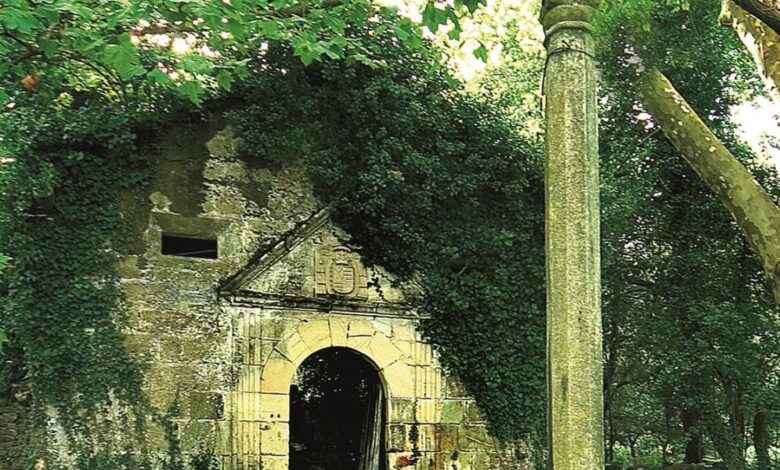
At the very beginning of the 20th century, an era of change and hope, local aristocrats decided to make a generous gesture—presenting this picturesque corner of land to Alfonso XIII as a site for building a summer palace. The idea seemed brilliant: the royal family would gain a secluded retreat amid nature, while the region would benefit from prestige and investment. In 1907, the monarch visited these lands in person to assess their potential. He was captivated by the wild beauty and panoramic views from the coast. However, the grand plans were not to be realized. Historical turmoil, political instability and perhaps a simple lack of funds buried the project, leaving behind only an intriguing page in history. Today, the memories of this past ambition survive only in the moss-covered ruins of the old village, the foundation of a massive hórreo (a traditional Galician granary), and the walls of a 17th-century chapel dedicated to the Miraculous Virgin Mary.
But the true value of Cortegada lies not in its monarchical past. This corner of the world is a sanctuary of untouched nature, home to the largest laurel forest in Europe that has been preserved in its wild, natural state. This is not just a grove, but a living cathedral, with columns of ancient trees whose crowns weave into a seamless green dome. Beneath this canopy, a unique microclimate prevails—humid, cool, and mysterious. Sunlight barely pierces the dense foliage, casting intricate patterns on the ground. There are two main trails for visitors: a circular route of about three kilometers, and a shorter path that leads through the very heart of the forest. With every step on the springy carpet of fallen leaves and ferns, you are immersed in a sense of tranquility and solitude that defines the most Atlantic part of Galicia.
Since 2002, this area has been part of the Atlantic Islands National Park, which imposes strict limits on visits. Access is only permitted as part of an organized tour led by an accredited guide. The short but memorable boat trip from Carril passes numerous floating platforms where the region’s world-famous shellfish are cultivated. Upon landing, visitors discover a world that for centuries existed by its own rules. Abandoned buildings covered in ivy, secluded coves with crystal-clear water, and a profound silence broken only by the cries of seagulls and the rustling leaves. Cortegada is a true gem, where a rich heritage and unique biodiversity merge in perfect harmony, creating a sanctuary of nature and history.