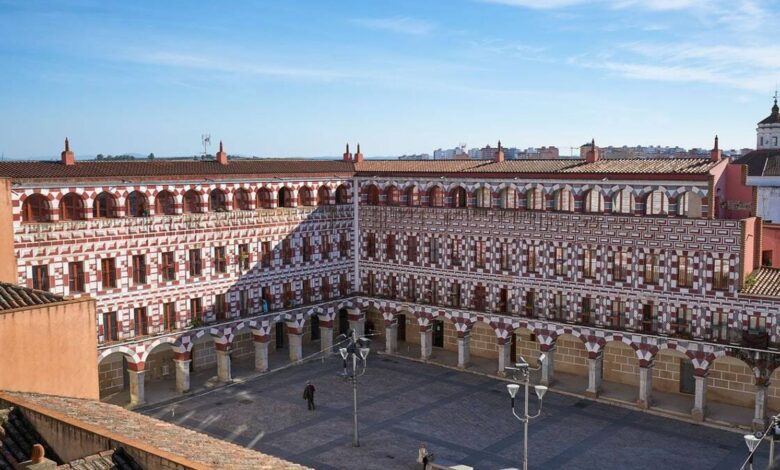
A square rarely mentioned by tourists has become a true symbol of change for Badajoz. Its fate is marked by a series of unexpected decisions, architectural experiments, and a return to its roots. Today, this corner not only embellishes the city but also shapes its character, drawing attention from both locals and visitors.
Unlike typical Spanish squares, every element here—from the arches to the facades—bears the imprint of eras and events. The space, once a hub of commerce and public life, has changed its face more than once. It was here, under the shadow of fortress walls, that city traditions were born, and every transformation of the square always reflected changes in Badajoz’s life.
Architectural Metamorphoses
The square emerged on the site of old Islamic buildings when the city began expanding beyond its medieval fortress. Its open shape stood in sharp contrast to the narrow alleyways of the old town. The arched galleries and their supporting columns created a sense of spaciousness and security at once. Merchants would gather here, share news, and resolve city affairs.
The square’s unique charm is enhanced by its famous arches: the northern Arco-Mirador, offering a panoramic view of the city, and the southern Arco del Toril, leading to other historic neighborhoods. Through the Arco del Peso del Colodrazgo, the square connects to nearby districts, while landmarks such as the Espantaperros tower and the Capitel gate rise nearby. Together, they create a distinctive ensemble, blending Moorish, Renaissance, and industrial influences.
The age of iron and change
At the end of the 19th century, the square underwent perhaps its most unexpected transformation: a metal market was built here, in line with the fashion of the industrial era. The new building occupied almost the entire space, changing the usual appearance of the square. The metal structures, then seen as symbols of progress, eventually became a source of problems—sanitation and sewage systems couldn’t cope with the influx of people and goods.
In 1970, the market was closed and its structure was moved to the university grounds, where it found a new life as a grand hall. This decision restored the historical appearance of the square and paved the way for large-scale restoration. The renovation of facades, especially the famous ‘red houses’, became a symbol of returning to roots and honoring the past.
Revival and new meaning
Today, the square has once again become a hub for gatherings, celebrations, and city events. Its facades shine with vibrant colors, and the geometric patterns on the walls hark back to its former grandeur. Official ceremonies, concerts, and exhibitions are held here, and the people of Badajoz take pride in their city for preserving and enhancing its heritage.
The square has become not just an architectural landmark but also a symbol of renewal. Its story illustrates how a city can evolve without losing its unique character. In this sense, Badajoz is reminiscent of other Spanish cities, where past and present are seamlessly intertwined. By the way, for those seeking unusual routes through the region, it’s worth paying attention to the unexpected discoveries and cultural routes of Badajoz — this city can surprise even the most seasoned travelers.
Badajoz Square is not just a historical monument but a living space where every stone has its own story. Here you can sense the breath of centuries, witness changing tastes and traditions, and understand why such places become the heart of the city.
Plaza Alta in Badajoz is one of the most striking and recognizable city squares in Spain. Its history dates back to the 15th century, when the city began expanding beyond the fortress walls. Over the centuries, the square has seen many transformations: from a medieval marketplace to an industrial pavilion and, later, the restoration of its historical appearance. Today, it is considered a prime example of harmonious architectural styles and a symbol of Badajoz’s cultural identity. Its facades, arches, and towers have become the city’s hallmark, while the square itself is a favorite gathering place for locals and visitors alike during celebrations and events.