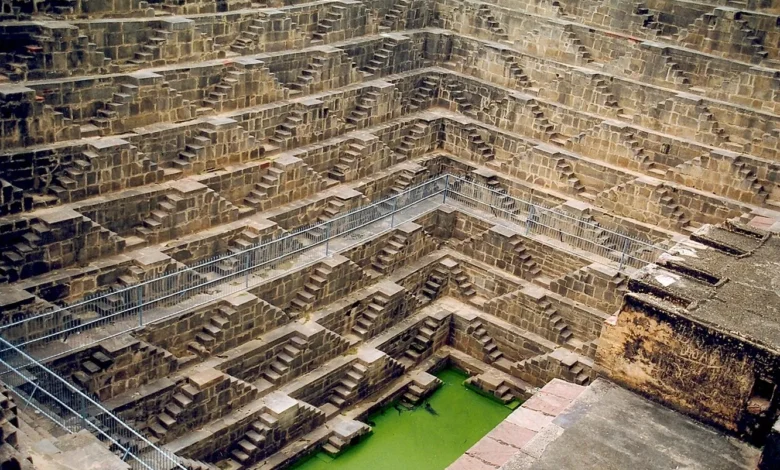
In India, where the arid climate and rapid urban growth have intensified water shortages, unique hydraulic structures known as stepwells are drawing renewed attention. These ancient constructions, dating back to the 3rd century BCE, once served not only as sources of water but also as centers of community life. Today, many are abandoned, filled with debris, or in ruins, and their former grandeur is all but forgotten.
However, the situation has started to change thanks to the efforts of Arun Krishnamurthy, an engineer and environmentalist who has dedicated his life to restoring water bodies across the country. Over the past two decades, he and his team at the Environmentalist Foundation of India (EFI) have revived hundreds of lakes and ponds. Now they have taken on an even greater challenge: the restoration of stepwells, which blend engineering prowess with architectural value.
A legacy of history
Stepwells, or baoli, were built in the arid regions of India and Pakistan. Their multi-level terraces allowed people to reach the water even during the driest months. Over time, simple pits evolved into true underground palaces, adorned with carvings, sculptures, and arches. People gathered here not just for water—these wells served as places for meeting, rest, and religious ceremonies.
In Delhi, for example, of the 32 known stepwells, only 14 are still functional today. The rest have either dried up or lie in ruins. The reasons are pollution, neglect, and the rapid expansion of cities, which is pushing out traditional water sources.
Modern challenges
Restoring stepwells requires not only engineering expertise but also a deep respect for history. Arun Krishnamurti points out that each site is unique: it is vital to preserve its architectural features without disrupting the natural balance. To achieve this, EFI engages local craftsmen, uses traditional materials, and minimizes structural intervention.
This approach allows not only to restore the original appearance of the wells, but also to revive their function — collecting and storing water. The restored sites become focal points for local communities and sometimes tourists, fostering a responsible attitude towards water resources.
Technology and tradition
The EFI team actively integrates ancient engineering solutions into modern projects. For example, water diversion and filtration methods used in baoli are now applied in cleaning and restoring lakes and ponds. This enables sustainable results without large-scale construction or expensive technologies.
In 2022, EFI completed restoration of Moosi Rani Sagar — one of Rajasthan’s most renowned stepwells. The organization is currently working on another six projects, expected to be finished by 2026. One site near Bangalore has already been cleaned and restored, though additional work is needed to repair decorative elements.
Social responsibility
One of the main challenges faced by Krishnamurti’s team is vandalism and apathy. To protect restored sites, EFI actively involves local communities in taking care of wells and lakes. Educational programs, volunteer initiatives and joint events are organized to help people feel responsible for preserving water resources.
Arun Krishnamurti is convinced that only joint efforts can not only save unique landmarks, but also secure the future for the next generations. For him, this work is more than just a job—it’s a true calling.
In case you didn’t know, the Environmentalist Foundation of India (EFI) is a non-profit organization founded by Arun Krishnamurti in 2007. Over the years, EFI has completed more than 150 waterbody restoration projects across 19 states in India. The team brings together engineers, environmentalists, and volunteers who use traditional methods and modern approaches to protect the country’s water resources and cultural heritage.