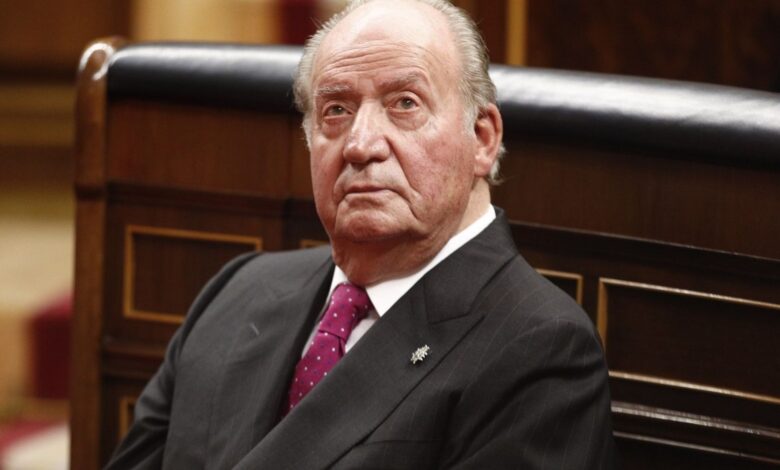
For the first time in many years, Spain’s honorary King Juan Carlos I has broken his media silence, granting an in-depth interview in which he addressed the most pressing issues in Spanish politics and history. The conversation took place at his temporary residence in Abu Dhabi, ahead of the release of his autobiographical book “Reconciliación,” which is already being hailed as a real sensation. The former head of state broke away from the monarchy’s tradition of political neutrality, sharing his personal perspective on major events of the past and present.
The monarch explained that his move to Nurai Island was motivated by a desire to shield his son, the reigning King Felipe VI, from excessive media scrutiny. He admitted that he often says exactly what he thinks, which creates certain challenges for the royal family. During the conversation, Juan Carlos I repeatedly returned to Spain’s transition to democracy, stressing that freedom was not simply handed to the country, but was the result of complex political processes in which he himself played a direct role.
A special place in his memories is held by advice he once received from his father, Don Juan de Borbón: always speak with and listen to those who disagree with you. Following this principle, he engaged in dialogue with all political forces, from the far right to the far left. As an example, he mentioned the legalization of the Communist Party in 1977—a move he considers his own achievement—and his warm relations with its then-leader, Santiago Carrillo. The former monarch even shared that, after the politician’s death in 2012, he personally visited Carrillo’s widow to offer his condolences.
Juan Carlos I did not shy away from addressing more controversial figures and events either. He painted a rather balanced portrait of dictator Francisco Franco, pointing out that it was Franco who made him king with the aim of creating a more open regime in the future. He also elaborated on the attempted coup of February 23, 1981. The monarch categorically rejected any suggestion that he sympathized with the coup plotters, stating that, on that day, the country faced not one but three conspiracies simultaneously. According to him, there was the Tejero coup, the coup led by General Armada, and a plot by politicians close to Franco’s regime. The most painful blow for him was the betrayal by Alfonso Armada, who had been his ally for 17 years.
In his remarks, the former king drew a parallel between the political culture of the past and the present. He nostalgically recalled a time when, in his view, left-wing forces treated state institutions with respect—unlike the current situation. These statements, which break the unwritten rules of the royal family, have already sparked widespread reaction and could have a significant impact on Spain’s current political landscape.