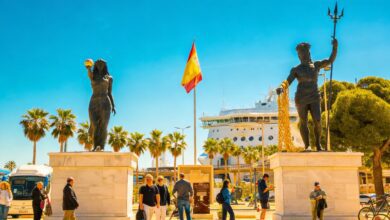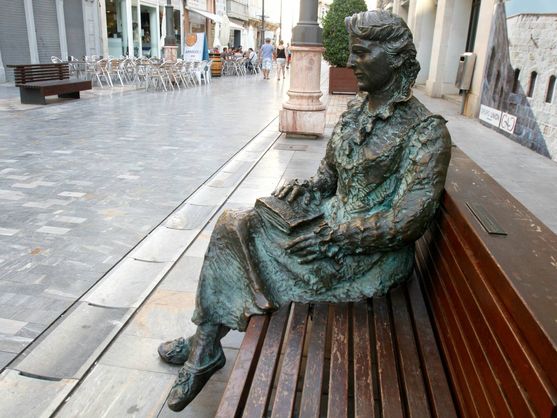
Strolling through Cartagena in 2025, it’s impossible not to notice how the urban space breathes art. Here, there’s no need to buy a ticket or check a schedule to experience beauty. Dozens of monuments, busts, and avant-garde installations have transformed this port city into a true open-air exhibition, where everyone can create their own route and immerse themselves in centuries of history reflected in bronze, marble, and steel.
A journey through this improvised open-air museum begins in the very heart of the city, where the past meets the present. On the streets and squares, one encounters figures emblematic of Cartagena. For example, the bust of King Charles III, whose orders led to the construction of powerful defensive fortifications that still define the city’s skyline. Nearby, on Carmen Street, stands a contemplative sculpture of writer Carmen Conde, the first woman admitted to the Royal Spanish Academy. Her presence is a reminder of the region’s rich literary heritage. Monuments dedicated to key events and traditions hold a special place in this collection. The majestic monument to the Heroes of Cavite and Cuba pays tribute to sailors who fell in the Spanish-American War and remains one of the city’s most recognizable symbols. The touching sculpture ‘Procesionista’ honors Cartagena’s famed Holy Week, capturing the solemnity and profound meaning of this religious event. There is also a monument to Isidoro Máiquez, one of the greatest actors of the 19th century, whose name is inseparably linked with the history of Spanish theater.
The port area of Cartagena is a chapter of its own in the city’s urban art scene. Here, where the salty wind mingles with the sound of ship horns, some of the largest and most impressive installations are found. The enormous “Whale Tail,” a 24-ton steel structure, seems to burst from the ground, serving as a reminder of the city’s unbreakable bond with the sea. This piece has become a favorite photo spot for both tourists and locals. But not all artworks here evoke tranquility. The striking sculpture “Zulo” by Víctor Ochoa is a powerful, emotional tribute to the memory of victims of terrorism. The figure of a person curled up in a confined space compels viewers to pause and reflect on the tragic chapters of recent history. Alongside these giants are other installations: old cannons, elegant marble statues lining the Paseo de Alfonso XII, and the Rostral Column, erected in honor of the port authority. The military theme continues with monuments to the marine and the conscripted soldier, paying tribute to the country’s defenders.
The Cartagena collection is not limited to history and tradition. Contemporary artists also contribute to the city’s image by addressing current issues. Installations such as “Anoxia” or “Forest in the City” draw passersby’s attention to environmental challenges and sustainable development, prompting reflection on the planet’s future. These works are seamlessly integrated into the urban landscape, creating a dialogue between classical heritage and the challenges of the twenty-first century. Religious motifs are also reflected in modern forms. At the Santa Lucía pier, a sculpture of the apostle Santiago marks the beginning of one of the pilgrimage routes—the Asaar Way. This symbolic point links Cartagena to a centuries-old tradition of pilgrimage. In this way, the urban environment becomes a place where collective memory, artistic experimentation, and spiritual quests intertwine, making every walk through Cartagena a unique cultural experience.