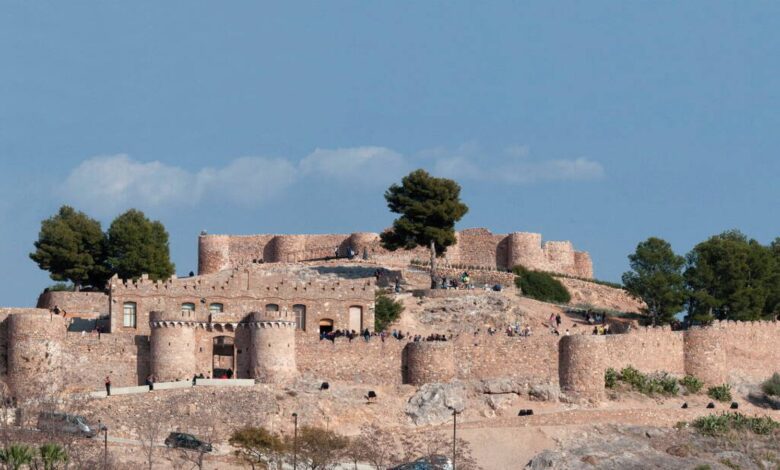
Rising in the heart of Castellón province, a fortress stands that has not only survived the centuries but has become a symbol of power struggles and endurance. Here, where mountains meet the sea, the destinies of entire peoples were decided. Its walls still echo with the thunder of sieges and the cries of victors. The Onda Castle, known as the fortress of three hundred towers, has long been an essential stop on the Valencian cultural route—but its true history is far more dramatic than it seems at first glance.
At first, it may look like just another monument of medieval architecture. But as you stroll along its bastions, it becomes clear: every tower, every fragment of wall bears the scars of fierce battles, shifting eras, and unexpected twists. Here, the ambitions of Muslim rulers, Christian knights, and power-hungry conquerors clashed, with the fortress itself repeatedly serving as the arena for decisive conflicts.
The Mark of El Cid and Military Secrets
The legendary warrior Rodrigo Díaz de Vivar—better known as El Cid Campeador—holds a special place in the castle’s history. His name is inseparable from this land: it was here that he consolidated his position, fighting for control over the crucial routes between the coast and inland regions. Onda Castle, built atop an ancient Roman settlement, became a key point in the defensive chain that guarded the northern approaches to Valencia.
In the 10th–11th centuries, the castle was built by Muslims, but soon attracted the attention of Christian kings. After the troops of Jaume I arrived in 1242, the fortress finally passed into Christian hands, and its walls became witnesses to new conflicts and changing rulers. Throughout the 12th–13th centuries, the castle repeatedly changed hands: it was governed by the Knights Templar, then the Hospitallers, and later the Order of Montesa. Each left their mark on the architecture and defensive systems, turning Onda into a true citadel capable of withstanding any siege.
The towers counted by days
It’s no coincidence the fortress earned the nickname the “castle of three hundred towers.” According to legend, there were as many towers as days in the year, each serving as a separate defense point. Even today, despite the destruction, the surviving towers and bastions impress with their scale. From the heights of the fortress walls, a breathtaking panorama unfolds: the old town, the surrounding valleys, and even distant hills where front lines once ran are all visible.
The castle became a battleground for fierce fighting throughout the ages. Battles raged here between Muslims and Christians, and in the 19th century, the fortress was occupied by Napoleonic troops. Later, during the Carlist Wars and the Civil War, Onda once again found itself at the center of events, with its walls providing shelter for soldiers and civilians alike.
A new life for an ancient fortress
Over time, the castle lost its military significance but was never forgotten. After a series of wars and destruction, it was restored and transformed into a cultural center and tourist attraction. In the 20th century, it hosted children’s camps and even a school colony, and today the fortress is recognized as a national monument and a cultural heritage site.
Visitors can stroll through the inner courtyards, climb the towers, and explore the archaeological museum located in the former albácar. The restored Muslim plaster decorations, discovered in one of the Andalusian buildings, are of particular interest. Thanks to modern tours and theatrical performances, the castle’s history comes vividly to life, allowing each guest to feel like a participant in the events that changed the course of the region’s history.
Immersion in the atmosphere
Today, Onda is not just a tourist attraction but a place where past and present intertwine in the most unexpected ways. Here, you can learn about military feats and intrigues, feel the breath of time, walk the same paths as great commanders, and witness how life has changed over the centuries. For many travelers, it’s more than just a tour—it’s a true adventure, full of mysteries and discoveries.
By the way, interest in Spain’s medieval fortresses remains strong. Recently, we reported on another unique landmark—the castle in Andalusia, where real tragedies and passions inspired famous writers. Its walls still hold memories of love, betrayal, and bloody endings, drawing tourists in search of emotion and history. Learn more about the fate of this mysterious place in the article at the link castle in Andalusia.
Immersing yourself in the atmosphere of the Onda fortress, it’s impossible not to wonder how many more secrets Spain’s castles conceal. Each one is a separate chapter in the nation’s history, filled with drama, heroic deeds, and unexpected discoveries. And perhaps, right here among the ancient walls, it’s possible to feel the true spirit of Spain.
Rodrigo Díaz de Vivar, better known as El Cid Campeador, was one of the most famous military leaders of medieval Spain. His name became a symbol of courage and martial valor, while his exploits inspired numerous legends and literary works. El Cid gained fame not only as a commander but also as a man who united people of different cultures and faiths. His path took him through countless battles, and his influence on the country’s history is still felt today. In Spanish culture, the figure of El Cid holds a special place, embodying the ideals of honor, loyalty, and the pursuit of freedom.