The stories of families who left their homeland in search of a better life often contain unexpected details that reshape how we see the past of entire regions. The Basque towns of Ondarroa and Markina-Xemein, connected to actor Jacob Elordi’s ancestors, are becoming more than just points on a map—they symbolize resilience, cultural richness, and remarkable traditions. Their unique locations and vibrant histories make these destinations a must-visit for anyone seeking the authentic atmosphere of northern Spain.
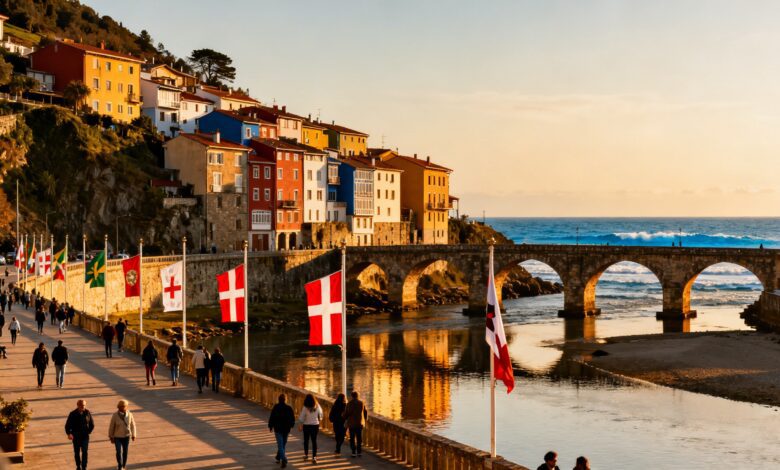
As Divinity reports, Elordi’s grandfather, fleeing Franco’s regime, found refuge in Australia, with his journey beginning in Ondarroa. This small town, located on the coast of the Bay of Biscay, captivates with its blend of rugged nature and architectural landmarks. Here, the Artibai River flows into the sea, forming a picturesque marina, while numerous bridges—including one designed by renowned architect Santiago Calatrava—connect different parts of the town. Ondarroa’s old center is a labyrinth of narrow streets, where colorful houses cling to the hillsides, and traces of maritime history and respect for women are evident at every turn, reflected in vibrant street murals.
Ondarroa: Life by the sea
Ondarroa is renowned not only for its port and fishing traditions, but also for its rich cultural heritage. The Likona Tower, once owned by the family of Ignacio de Loyola, and the 15th-century Church of Santa María are striking examples of medieval architecture. The old neoclassical municipal building, adjoining the church, is equally fascinating. The town pulses to the rhythm of its festivals: here, locals celebrate not only traditional carnivals, but also unique regional events such as Anchovy Day in May, the Caminaspí Festival in June, and the famous “Blue Shoe” cycling race at the end of June. In summer, the town attracts foodies and water sports enthusiasts, and in August, a regional produce fair coincides with local regattas.
Every event in Ondarroa is more than just a celebration—it’s an integral part of the town’s identity, where past and present are tightly interwoven. Locals honor the memory of those who emigrated and take pride in their roots. The town’s inviting atmosphere encourages leisurely strolls, while views of the Atlantic and rolling green hills make it one of the most picturesque corners of the Basque Country.
Markina-Xemein: traditions and pilgrimage
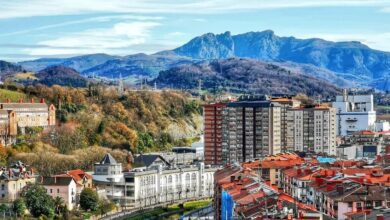
Fourteen kilometers south of Ondarroa lies Markina-Xemein, the hometown of Jacob Elordi’s father. This place is known as the ‘university of Basque pelota’: many famous athletes grew up here, and the local frontón is considered iconic among fans of the national sport. But the city is shaped by more than just sport. Markina-Xemein is a key stop for pilgrims traveling along the Camino de Santiago, which has left its mark on both the city’s architecture and its atmosphere.
Among the local sights are the 16th-century Church of Santa María, a Neoclassical cemetery recognized as a national monument, and the unique Chapel of San Miguel de Arretxinaga, which houses a natural megalithic complex inside. The city is adorned with ancient towers and palaces, including striking Baroque and Gothic buildings, as well as traditional rural structures, like the Barinaga granary. In summer, numerous festivals honor the patron saints of different districts, while the main celebration, dedicated to the Virgin of Carmen, brings residents and visitors together in July.
Cultural heritage and modern life
Despite their modest size, both cities play an important role in preserving Basque identity. Their architecture, festivals, and way of life reflect a strong connection to the region’s history and a memory of those forced to leave their homeland. Nowadays, the towns attract not only descendants of emigrants but also tourists eager to experience the real Basque Country—unvarnished, authentic, and fiercely respectful of its traditions.
In recent years, interest in these places has grown due to the fame of Jacob Elordi, whose family has become a symbol of the Basque diaspora. However, for locals, something else matters more: preserving the unique spirit of their towns and passing it on to new generations. Here, people value not only the past, but also the ability to live in harmony with nature and neighbors, which is especially evident during holidays and family gatherings.
Jacob Elordi is an Australian actor of Basque descent who gained global recognition through his roles in film and television. His family left the Basque Country for Australia in the mid-20th century, fleeing political persecution. Elordi often emphasizes his connection to Basque culture and proudly speaks about his ancestral heritage. Thanks to his popularity, interest in Basque towns linked to his family has increased significantly, and these towns have become symbols of resilience and the region’s cultural richness.