Far from the bustling coasts and the rush of the capital, in the heart of the Iberian Peninsula, lies a landscape that seems straight out of a fantasy novel. Here, geology and prehistory have intertwined, offering travelers not just a walk, but a true immersion into the depths of time. In autumn, when the heat subsides and the forest leaves turn warm shades, a journey through these lands delivers especially vivid impressions and becomes an unforgettable adventure.
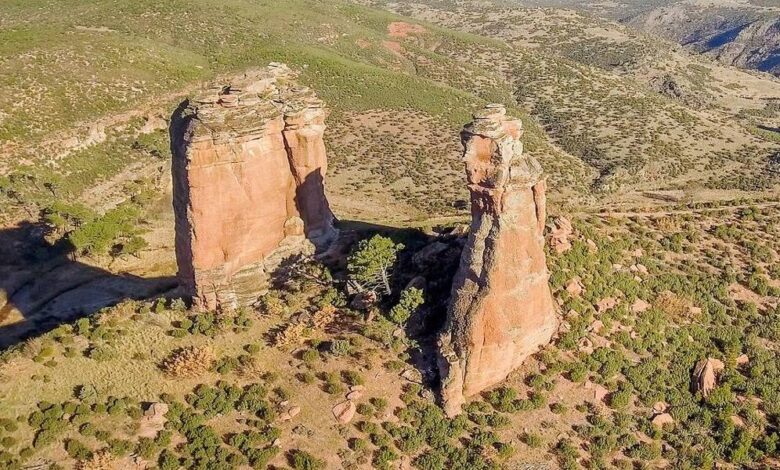
This treasure is located within the boundaries of the Alto-Tajo Natural Park, one of the most scenic in the region. The main sculptor of these landscapes is the Linares River. For millions of years, its waters have patiently carved a path through thick Mesozoic layers—sandstone, slate, and limestone—shaping a whimsical terrain. Among the many geological formations, two giants stand out: El Puntal del Milagro and Peña Eslabrada. These monumental cliffs, resembling the towers of a crumbling giant’s castle, rise above the surroundings like silent guardians. Their shapes and textures recount the geological history of our planet, recorded in the layers of sedimentary rock.
Very close to these natural monuments lies the Los Casares cave, which harbors an even more ancient history. This archaeological site, designated a National Monument in 1935, serves as a portal to the Paleolithic era. Its walls are adorned with dozens of engravings estimated to be between 15,000 and 30,000 years old. With remarkable skill, prehistoric artists depicted scenes from their lives: animal figures, anthropomorphic silhouettes, and mysterious symbols. These cave paintings are an invaluable testament to the birth of human art and the worldview of our distant ancestors.
A special walking trail has been created to explore this unique ensemble, starting at the rest area near the cave in the municipality of La Riba de Saelices. The route is about ten kilometers long and is rated as easy, making it accessible to most visitors, including families with children. The path winds along the riverbed, at times disappearing into the forest and then emerging onto open spaces with panoramic views of the cliffs. Several shallow fords along the way add a touch of adventure to the hike. This is a leisurely walk, designed for contemplation and wildlife observation in the Alto Tajo park, especially for spotting birds of prey soaring high overhead. Please note that some sections of the trail may have been damaged by the severe floods of 2024, so it’s advisable to check the current condition of the path before setting out.
This area impresses not only with its visual appeal but also with its cultural and educational value. Information panels along the trail help visitors better understand how the landscape was formed and the significance of the archaeological finds here. The abundance of shady spots and the chance to see wildlife make the walk both comfortable and engaging. Standing at the foot of the giant geological formations, in a silence broken only by rustling leaves and birdsong, it’s easy to see why this land leaves such a powerful, almost supernatural impression.