For centuries, the fork remained a mysterious and even intimidating object for the inhabitants of Rus. This utensil first appeared at court only in the 14th century, but for a long time it was limited to the nobility. Ordinary people preferred to stick to the familiar wooden spoon and viewed the new item with suspicion. The reason was not just conservatism: the shape of the fork resembled horns, which many associated with evil spirits and the devil. People were reluctant to bring such an object into the home, fearing its bad influence.
The fork began to spread among the aristocracy only in the early 17th century, when Marina Mniszech, the wife of False Dmitry I, brought it from Europe. However, even then it remained a curiosity and did not become common among the general population until the early 20th century. Peasants saw no reason to use this foreign novelty: all dishes could be eaten with a spoon, and for especially thick foods, hands were enough. The spoon was a universal tool everyone carried with them, especially while working in the fields.
Peter the Great and new customs
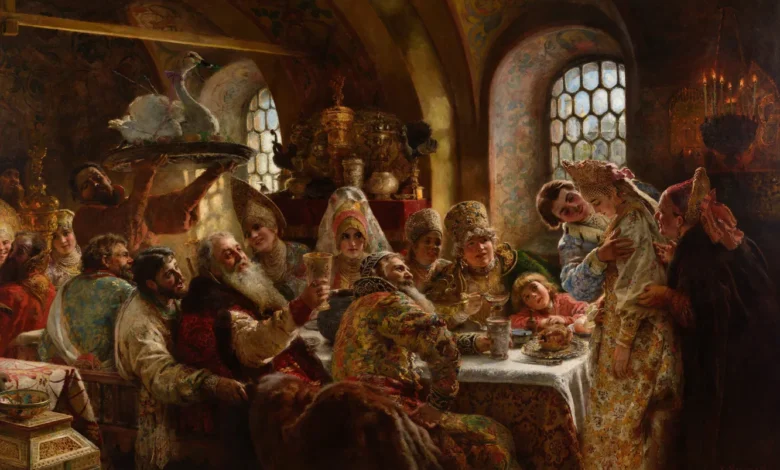
The situation began to change under Peter I. The emperor not only introduced the word “fork” into everyday use, but also ordered a set of silver cutlery for himself. Peter always carried them with him, even on long journeys, and would lay them out at the table when dining as a guest. Soon, members of the court followed his example: boyars started bringing their own utensils to receptions, hiding them inside their robes or boots. This was necessary because, at lavish feasts, cutlery rarely appeared on the tables—table setting traditions were only just beginning to take shape.
At the beginning of the 19th century, etiquette became more sophisticated: special utensils for different dishes appeared, and dining turned into a real art form. Until then, both ordinary peasants and the nobility mostly ate with spoons or their hands. The spoon was not only a household item, but also a symbol of prosperity and an object of folk art. Spoon makers carved them from wood, painted them by hand, and sometimes even turned them into musical instruments.
The spoon as part of culture
Each spoon had its own purpose and name. The universal wide spoon was called a ‘mezheumok’—it was convenient for eating porridge or soup. A small ‘lzhitsa’ was used for communion in church, while barge haulers preferred large, rough ‘butyrki,’ which could be used to stir food for many people. Spoon making became a true craft: artisans from various provinces created pointed, flat, and even folding spoons, some of which were quite expensive. Special spoons were made for caviar, tea, or mustard, and church spoons were decorated with a carved cross on the handle. It is known that Peter the Great’s spoon was inlaid with ivory.
The saying ‘to beat baklushi’ is also associated with spoons. A blank for a spoon was called a ‘baklusha,’ and an experienced craftsman could make one in just a few minutes. Over time, the phrase took on an ironic meaning, coming to signify easy, almost pointless work.
Dining traditions
Boyars were used to always carrying their own cutlery, even when visiting foreigners. In Russian homes, guests were welcomed generously, with the table set immediately, while European diplomats would first engage in lengthy conversations. Russian aristocrats, noting this difference, invented an amusing joke: when visiting Europeans, they would instantly pull spoons out of their boots, hinting at their eagerness to get to the meal. Such behavior often put the hosts in an awkward position, much to the guests’ delight.
In Russia, the spoon was more than just a household item—it was part of the national character. From childhood, it accompanied a person, becoming a symbol of comfort and prosperity, as well as a source of pride for artisan craftsmen. The fork, on the other hand, remained foreign and even suspicious for a long time, only becoming a familiar part of the table setting in the 20th century.