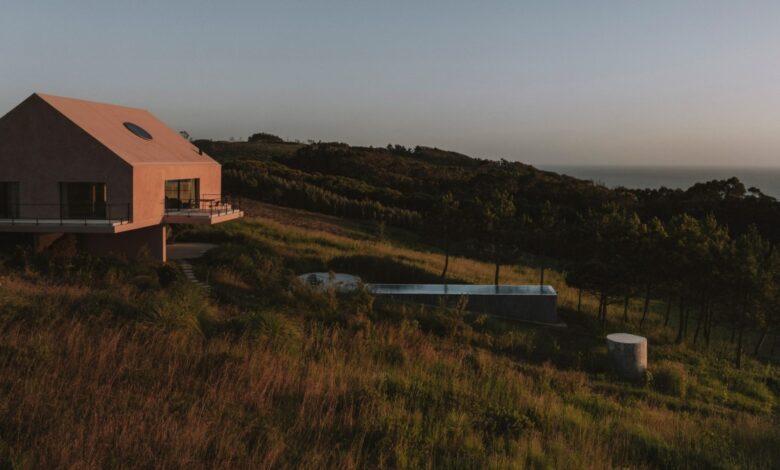
On the west coast of Portugal, near Lourinhã, a house has been built that immediately stands out for its unusual simplicity. The 120-square-meter project was designed by Lisbon-based architectural firm Extrastudio. The exterior of the building resembles traditional rural structures of the region, yet it completely reinterprets them using contemporary architectural techniques. The house sits on a concrete base, and its clean lines and gabled roof make it instantly recognizable among the surrounding buildings.
The architects aimed not just to blend the house into the landscape, but to literally immerse it in the local atmosphere. To achieve this, they used a coarse, earth-toned plaster and designed the layout so that the plot appears to flow beneath the overhanging terraces. Four massive concrete walls support the entire structure, lifting it above the ground and creating a sense of lightness despite the solid materials. Entry is through an exterior staircase leading into a spacious area where the living room, dining room, and kitchen are combined into one open space on the southern side, while three bedrooms are situated to the north, each opening onto private terraces through sliding glass doors.
Minimalism in the details
The interior of the house is designed to maximize freedom and flexibility. There are no strict boundaries between areas; the space itself invites experimentation. High ceilings with a sloping plane and a large round dormer frame provide abundant natural light, changing throughout the day. Special attention is paid to light: each room features circular openings that let in rays of sunlight before sunset, turning light itself into a design element.
The living room features a suspended steel fireplace that contrasts with the marble kitchen countertop. The dining area opens onto a spacious terrace overlooking the ocean, while the garden features a long, narrow pool that visually extends the line of the house and creates a sense of tranquility. The architects avoided complex technical solutions, opting instead for simple mechanisms: the windows slide completely into the walls, transforming the house into an open space where the boundary between indoors and outdoors nearly disappears.
Connection to nature
The materials used in the finishes emphasize the home’s connection to its surroundings. The walls and ceilings are finished with hand-crafted gray plaster, the floors are made of smooth concrete, and wooden elements add warmth and comfort. This approach has created a space where minimalism does not feel cold or lifeless, but rather encourages relaxation and quiet contemplation.
A key challenge for the architects was to preserve a sense of seclusion without isolating the house from nature. Thanks to a thoughtful layout and the use of natural materials, the home blends seamlessly into the landscape and maintains harmony with its surroundings. Terraces and large windows offer panoramic views of the coastline, while the interiors are filled with soft, diffused light.
Functionality and aesthetics
Despite its external simplicity, the house is meticulously designed down to the smallest detail. Every element of the interior serves multiple purposes, and the absence of excess decor makes the space as convenient as possible for everyday living. Nothing in the house is accidental: even the arrangement of furniture and lighting follows the overall concept of simplicity and comfort.
Special attention was paid to privacy: the bedrooms are separated from the common areas, and sliding doors allow you to fully isolate the private space or, on the contrary, connect it with the terrace. This approach makes the house ideal for relaxation, letting you escape the bustle of the city and enjoy the tranquility.
Architectural experiment
Casa Plaj is not just a vacation home, but a true architectural experiment that blends respect for local traditions with modern trends. The project demonstrates how familiar shapes and materials can be reimagined without losing touch with history and nature. Here, minimalism is not an end in itself, but rather a way to highlight the beauty of simple things and create a space you’ll want to stay in for a long time.
The house on the Louriñha coastline exemplifies how contemporary architects can engage with heritage—not by copying the past, but by reinterpreting its ideas in a new light. This approach leads to unique creations that not only enhance the landscape but also become an integral part of local culture.
In case you didn’t know, Extrastudio is a renowned architecture firm from Lisbon specializing in modern residential and public projects. The company often works with minimalist forms and natural materials, aiming to create harmony between architecture and nature. In recent years, the firm has completed a number of landmark projects in Portugal and beyond, earning recognition among both professionals and fans of contemporary design.