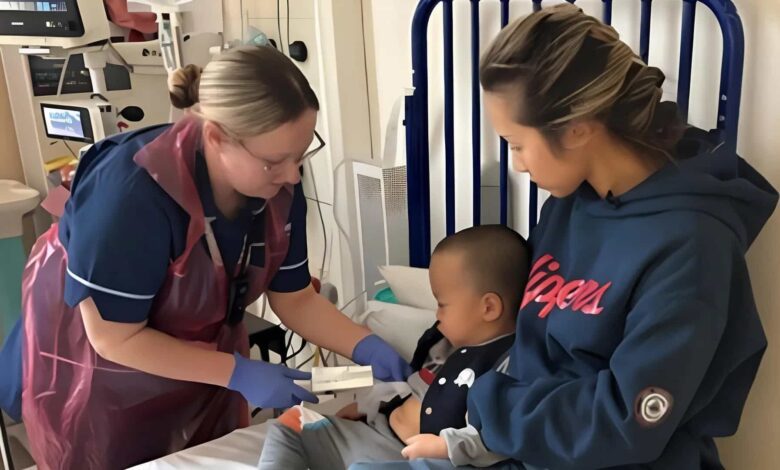
In February 2025, three-year-old Oliver Chu became the first patient in the UK to undergo a groundbreaking gene-cell therapy to treat Hunter syndrome. This rare inherited disorder prevents the body from producing a necessary enzyme, leading to severe organ dysfunction and cognitive impairment. Until now, treatment was limited to expensive lifelong supportive care that could not halt the progression of the disease.
Doctors from the University of Manchester and Royal Manchester Children’s Hospital spent more than a decade developing a method not just to relieve symptoms, but to address the root cause of the disease. As a result of their efforts, they created a technology based on using the patient’s own stem cells, into which a corrected gene is introduced in the lab.
How the new therapy works
The procedure begins by collecting stem cells from the child. In the laboratory, specialists correct the defective section of DNA responsible for producing the vital enzyme. The modified cells are then returned to the patient, enabling the body to produce the missing enzyme on its own and helping to clear toxic substances.
Unlike traditional enzyme replacement therapy, which requires regular infusions of the drug Elaprase, the new approach eliminates the need for ongoing procedures. Just a few months after the intervention, Oliver Chu showed high enzyme levels in his blood, and the weekly infusions were no longer necessary.
Advantages and prospects of the method
According to Professor Rob Wynn, head of the bone marrow transplant program at the Royal Manchester Children’s Hospital, the new technology is not only safer but also more effective than existing methods. Using the patient’s own cells eliminates the risk of rejection and the need to search for a donor, and also allows for more stable results.
Of particular importance is the ability of the modified cells to penetrate the brain, where they break down accumulated toxic sugars. This raises hopes of preventing the onset of dementia and other cognitive impairments that were previously considered inevitable in Hunter syndrome.
Hunter Syndrome: Challenges and Limitations of Traditional Treatment
Hunter syndrome (mucopolysaccharidosis type II) is an extremely rare disorder that occurs mainly in boys. Without the necessary enzyme, complex sugars build up in the body, leading to joint stiffness, hearing loss, and problems with the heart and breathing. Children often experience developmental delays and reduced cognitive abilities.
Enzyme replacement therapy with Elaprase helps partially manage the physical symptoms of the disease, but it does not prevent brain involvement. Additionally, the cost of treatment is extremely high, and the procedures must be carried out throughout the patient’s entire life.
The future of gene therapy for rare diseases
The success of the first clinical case opens up new possibilities for treating not only Hunter syndrome but also other inherited diseases caused by enzyme deficiencies. Researchers hope that in the coming years, the technology will become available to more patients, with its effectiveness and safety validated through continued observation.
Currently, Oliver Chu is feeling well, his health indicators remain consistently high, and doctors continue to monitor his condition closely. The boy’s parents note that after the procedure, their son has become more active and recovers quickly following treatment.
Reference by RUSSPAIN. The University of Manchester and its role in global science
The University of Manchester is one of the leading research centers in the UK and Europe. Founded in the 19th century, it is renowned for its achievements in medicine, biotechnology, and genetics. The university hosts over 40,000 students and thousands of researchers, including Nobel Prize laureates. The Royal Manchester Children’s Hospital, where the treatment took place, is considered one of the largest pediatric centers in the country and specializes in innovative therapies for rare diseases.