The change of power in Iran in 2026 led to unexpected consequences for Europe and Spain. The country’s new leader, Mohtaba Jameneya, has proven to be not only a religious authority but also the owner of an impressive portfolio of elite real estate outside his homeland. According to russpain.com, his assets include luxury hotels, resorts, and mansions in key European capitals as well as on the Balearic Islands. There are questions not only about the origin of these funds but also their connection to international sanctions imposed on Jameneya’s inner circle in 2025.
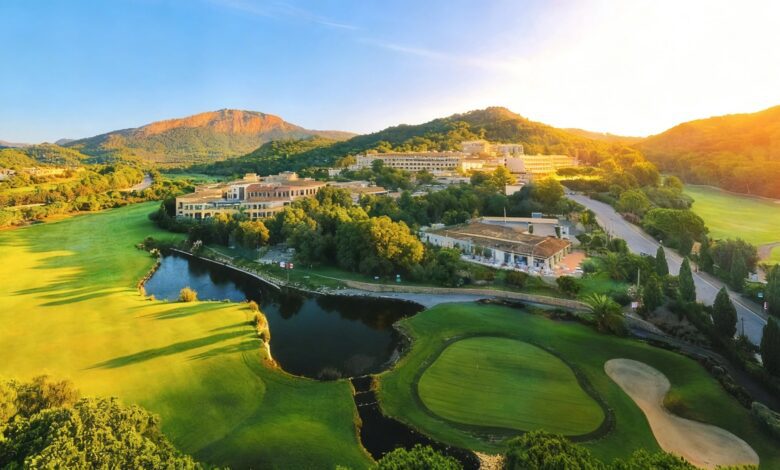
In the spotlight is the exclusive Steinberg Golf & Spa Resort in Mallorca, valued at about 22 million euros. According to British media, this property is controlled through a network of companies linked to Jameneya’s confidant, Ali Ansari. Ansari is identified in investigations as a key intermediary between Iran’s elite and the European real estate market. Authorities in the UK and Germany have already frozen part of his assets, suspecting that the financing is routed through schemes tied to oil exports and the activities of the Islamic Revolutionary Guard Corps.
European trail
In London, attention has focused on mansions on Bishops Avenue, one of the country’s most expensive streets. According to Bloomberg, properties worth more than 70 million euros were acquired here via the company Smart Global Limited. Similar schemes are seen in Germany, where two major Hilton hotels in Frankfurt and the Bero Oberhausen shopping center were purchased via structures in the Netherlands. The total value of European assets linked to Jameneya is estimated at 400 million euros.
Spanish experts note that such investments not only generate income but also serve as a tool for influencing European markets. Amid sanctions and Iran’s political isolation, these schemes allow the country’s elite to maintain access to capital and protect their interests abroad. Official documents rarely mention Khamenei by name—the assets are registered to trusted associates and affiliated companies.
Sanctions and investigations
In 2025, British and European regulators tightened controls over financial flows linked to Iran. Ali Ansari was sanctioned for allegedly funding entities connected to the Islamic Revolutionary Guard Corps. His assets in London, valued at 140 million euros, were frozen. Despite this, Ansari publicly denies ties to Khamenei and claims his business is not politically affiliated.
In Spain, the situation is complicated by the fact that some properties linked to Khamenei’s circle continue to operate and generate profit. So far, Spanish authorities have not taken strict measures, but pressure from the EU and US is increasing. Analysis by russpain.com suggests similar schemes may be used by other Iranian elite members to circumvent sanctions and legalize funds.
Tourism business
A special focus in Jameneh’s portfolio is on properties in tourist regions. In addition to Mallorca, his interests extend to the Alps, where he acquired the luxurious Schlosshotel Kitzbühel. In Germany, he owns two Hilton hotels as well as a major shopping center. These investments not only provide a steady income but also allow him to influence the development of tourism infrastructure in Europe.
Experts note that such investments could become the subject of new investigations, especially if a link to money laundering or sanctions evasion is proven. At the same time, European authorities face challenges in identifying ultimate beneficiaries, as ownership structures grow increasingly complex and opaque.
Mohtaba Jameneh is a controversial figure not only in Iran but abroad. His rise to power was supported by the younger wing of the Islamic Revolutionary Guard Corps and close ties to economic elites. In recent years, he has actively consolidated his influence, employing both religious and financial instruments. A similar situation occurred in the early 2020s, when several Middle Eastern leaders also sought to legitimize their assets through European holdings. Those investigations led to high-profile arrests and asset freezes, yet the flow of capital could not be fully stopped. Today, history repeats itself, but the scale and schemes are increasingly complex and the consequences less predictable.