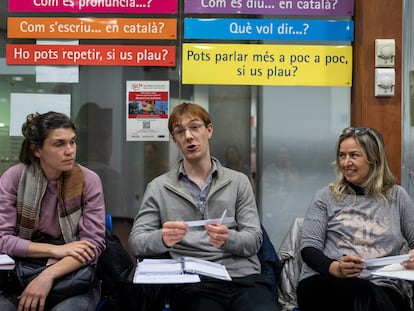
The introduction of mandatory Catalan language certification for residence permit renewal could change the lives of hundreds of thousands of migrants in Spain. The new initiative, proposed by the government of Catalonia, has already sparked lively debate among experts and migrants themselves. According to estimates, around 500,000 people could be affected by these changes, with approximately 150,000 living in Catalonia itself. Authorities believe this measure will help strengthen linguistic and social integration, but many are concerned that a shortage of accessible courses will create additional barriers for legalization and employment.
The core of the proposal is that, upon the first attempt to renew their residence permit, migrants would need to prove they have enrolled in Catalan language courses. They would be given a year to fulfill this requirement, but it remains unclear how actual language proficiency will be verified. According to russpain, discussion of this measure became the central topic at the first meeting on implementing the National Pact for Language, where Catalan authorities presented a progress report on their language policy.
Shortage of courses and new challenges
The main challenge faced by the reform’s initiators is the acute shortage of places in free Catalan language courses, particularly at the basic level. These classes are often crucial for migrants who need to obtain or renew their work and residence permits. Despite government promises to provide enough courses, many doubt the system can cope with the sharply increased demand. In recent years, the number of foreigners seeking to learn Catalan has steadily grown, and queues for free classes continue to lengthen.
Catalan authorities insist they are prepared to expand the network of language centers and increase funding for integration programs. However, representatives of migrant organizations point out that even now many are forced to wait months to enroll in the necessary course. If the new rules are approved, the situation could worsen, leaving some migrants in limbo, unable to meet the language requirement.
Integration or discrimination?
The official position of the Catalan government is to make knowledge of Catalan a mandatory element of integration and social cohesion. Officials emphasize that language is the key to successful adaptation and full participation in regional life. However, critics of the initiative argue that such measures may lead to discrimination and complicate the legalization process for the most vulnerable groups of migrants. The issue is particularly acute for those working in low-paid jobs who cannot afford extended language courses.
At the same time, some experts note that the requirement to know the language when renewing a residence permit is not unique to Europe. Several countries already have similar regulations, and they do help foster integration. However, the success of such reforms depends on the availability of educational resources and the flexibility of the proficiency assessment system. In Catalonia, it is still unclear whether enrolling in a course will suffice or if passing an exam will be required.
Plans and prospects
The National Pact for Language, under which the new initiative is being discussed, includes more than 200 measures to support and promote Catalan. According to officials, 71 of these have already been implemented, with another 124 in the process of being introduced. Authorities promise that language policy will take into account the interests of all residents, including migrants. However, it remains unclear how the enforcement of the new requirements will be organized and what consequences await those who are unable to prove their language proficiency.
In the coming months, the proposed changes are expected to be actively discussed at the government and community organization levels. Migrants and their families are closely following the situation, fearing that the new rules may complicate their circumstances. The question of access to courses and the fairness of the knowledge assessments remains open, and the initiative itself has already become one of the most debated topics in Catalonia.
Francesc Xavier Vila is a key figure in Catalonia’s language policy in recent years. He serves as the Secretary for Language Policy and actively promotes reforms aimed at strengthening the status of the Catalan language in society. Under his leadership, a large-scale program for the development of language courses and migrant integration has been implemented. Vila is known for his consistent stance: he believes that knowledge of Catalan is not just a matter of identity, but also an important tool for social cohesion and equal opportunity. His work draws both support and criticism, but it is he who sets the strategy for language policy changes in the region.