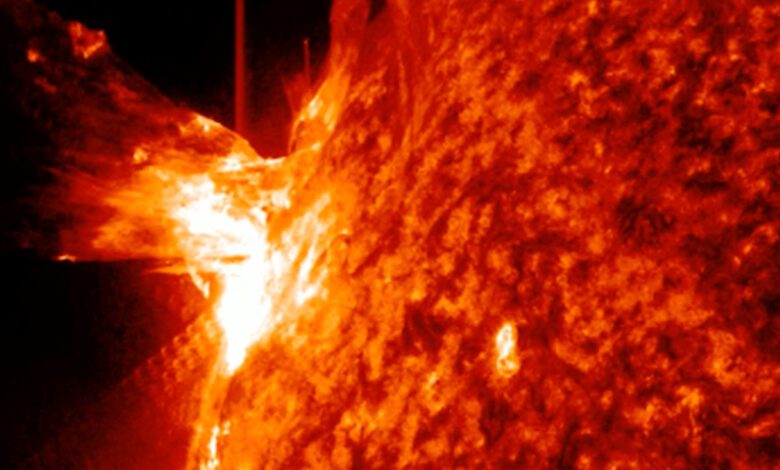
Australia has experienced major radio communication outages after one of the most powerful solar flares in recent years erupted on the Sun’s surface. The X-class event led to a temporary loss of signal across vast areas of the continent. Experts note that such phenomena can not only disrupt radio stations, but also pose threats to other systems dependent on the state of the ionosphere.
X-class solar flares are considered the most intense among known cosmic events. Their energy can reach Earth within minutes, causing electromagnetic disturbances in the atmosphere. This time, the impact was felt not only by radio operators but also by navigation and air safety services.
Impact on technology
Experts emphasize that modern communication systems are vulnerable to space weather. Flares of this magnitude can disrupt not only radio stations but also satellite channels and GPS navigation. In Australia, some airlines were forced to temporarily alter their routes to avoid areas with unstable communication.
According to specialists, such events are becoming increasingly frequent as the Sun approaches the peak of its activity. This requires telecom and transport operators to constantly monitor space conditions and be prepared for rapid response to potential disruptions.
Scientific observations
Astronomers and meteorologists closely monitor the Sun’s behavior using advanced telescopes and satellites. These observations make it possible to issue early warnings about potential solar flares and minimize their impact on infrastructure. However, despite scientific advances, it is still impossible to fully predict the strength and exact timing of such events.
In recent years, scientists have noted an increase in the number of powerful solar flares. This is linked to the star’s natural cycles of activity, which repeat roughly every 11 years. During peak periods, the likelihood of strong storms rises significantly.
Risks to society
Solar storms pose a threat not only to technology, but also to the health of people onboard aircraft or working in high latitudes. The radiation associated with flares can reach dangerous levels. As a result, airlines and emergency services regularly receive recommendations to adjust routes and operating protocols.
In Australia, complaints about disruptions to mobile networks and internet service were reported following the most recent flare. Telecom operators assure that they are taking all necessary measures to restore normal system operations and prevent similar incidents in the future.
The future of space weather
Scientists continue to develop new methods for forecasting solar activity. Efforts are underway to create communication systems that are more resilient to space weather. In the coming years, new satellites are expected to be launched that will monitor changes on the Sun’s surface in real time and provide warnings about potential threats to Earth.
International cooperation in space weather monitoring is becoming increasingly important. The exchange of data between countries allows for a quicker response to emergencies and helps minimize economic damage and risks to public safety.
In case you didn’t know, the Sun is the closest star to Earth, and its activity has a direct impact on our atmosphere and on modern technology. X-class solar flares are rare but extremely powerful events that can disrupt power grids, radio communications, and navigation systems. Because of its geographic location, Australia regularly experiences the effects of space weather. Scientists around the world continue to study the nature of solar storms to better protect infrastructure and alert the public to potential risks.