The issue of compensation after major transport disasters always sparks intense debate in Spanish society. The recent government decision to allocate 20 million euros to support those affected by the railway accidents in Adamuz (Córdoba) and Gelida (Barcelona) has become one of the most discussed events in recent months. For many families who lost loved ones or faced serious injuries, this step represents not only financial assistance but also recognition of their right to prompt and fair compensation.
In January, the tragedy claimed the lives of 46 people, with another 164 sustaining injuries of varying severity. Authorities announced the launch of a special payment mechanism that includes both direct compensation and advance payments. Families of the deceased are entitled to up to 72,000 euros as a lump-sum payment, as well as a similar amount in advance, allowing them to receive support without waiting for all legal procedures to be completed. For those injured, the amounts vary depending on the severity of the injuries—from 2,400 to more than 84,000 euros, with payments also split between a main sum and an advance.
Payment details
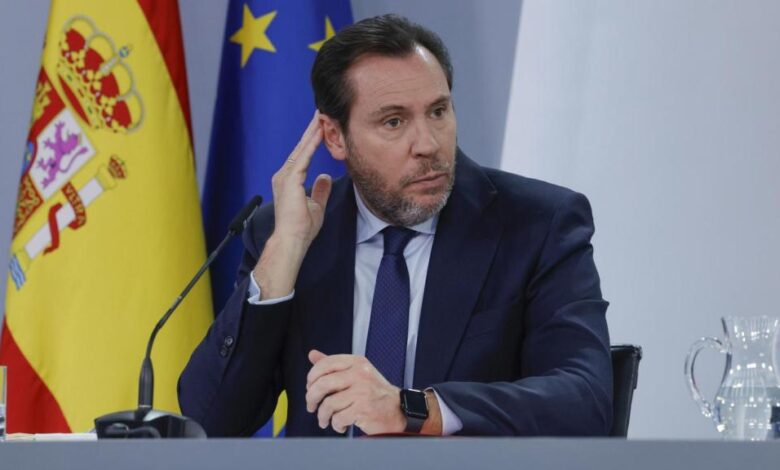
The Minister of Transport and Sustainable Mobility, speaking after the Cabinet meeting, emphasized that the new payment procedure was developed to ensure prompt support. According to him, the state cannot afford to act within standard bureaucratic frameworks when lives and health are at stake. As a result, payments will be made as quickly as possible, and recipients will be exempt from tax obligations.
Special attention has been given to ensure that victims are not left without funds while awaiting decisions from insurance companies. After the insurer assesses the damages, victims will receive an additional amount equal to what has already been paid by the state. In this way, the total compensation for a bereaved family can reach €210,000 when all sources of support are considered.
Reforms and new mechanisms
The government has announced not only emergency measures, but also the start of work on long-term legislative changes. Plans include creating a permanent state mechanism to ensure automatic and timely compensation payments to victims of transport accidents in the future. This approach aims to eliminate lengthy legal disputes and conflicts between insurers and victims, which often drag on for years.
The authorities emphasize that the new system does not negate the subsequent determination of responsibility for specific individuals or organizations involved in the tragedies. However, the state assumes the obligation to provide assistance to the victims at an early stage, without waiting for investigations and court proceedings to be completed.
Public response
The decision to allocate such a significant sum has sparked mixed reactions. On the one hand, many welcome the initiative, considering it a step toward justice and care for citizens. On the other hand, there are ongoing discussions about transparency, allocation criteria, and the potential for abuse. Some experts note that such measures could set a precedent for future disasters and therefore require clear rules and oversight.
Families of the victims and survivors have already started applying for payments, but not everyone is satisfied with the amounts set or the procedure for receiving them. Details are actively discussed on social networks and forums: who can qualify for the maximum payments, how quickly the money can actually be received, and what to do if the insurance company delays the process. The authorities promise to respond promptly to complaints and adjust the mechanism as necessary.
The future of compensation
The introduction of a new compensation procedure could change the approach to awarding damages for incidents in public transportation nationwide. If the experiment proves successful, similar schemes may be adopted for other modes of transport as well. For now, all eyes are on Adamuz and Gelida, where families continue to fight for justice and fair compensation for their losses.
The question of how effective the new system will be remains open. However, it is already clear that the government is ready to take more responsibility for protecting citizens in emergency situations, even if this sparks debate and requires reassessing established procedures.