The events in the Spanish Congress this time were not just another vote — they became a litmus test for the country’s entire political system. For millions of Spaniards, the issue of pensions and social protection has always been particularly sensitive. However, the government’s attempt to combine pension indexation and anti-eviction measures in a single decree sparked unprecedented controversy and led to an unexpected outcome.
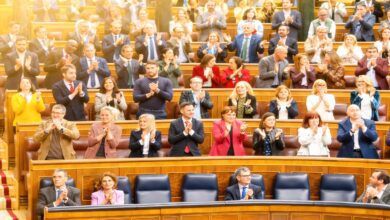
As a result of the vote, which united representatives from PP, Vox, Junts, and UPN, Pedro Sánchez’s government suffered its first major defeat in 2026. The decree, which was supposed to provide a 2.7% pension increase in line with inflation, as well as extend the eviction moratorium and introduce additional social support measures, was rejected by an absolute majority. This decision not only dealt a political blow, but also highlighted the fragility of the coalition and growing discontent within parliament.
An unexpected alliance
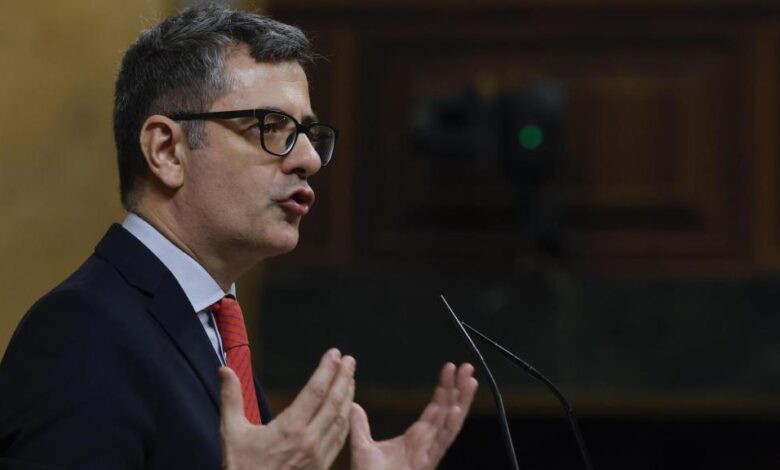
The key point was that the opposition united not so much against the idea of increasing pensions, but against the attempt to link this issue with measures to protect the so-called ‘okupas’. Representatives of PP and Junts openly stated that they support pension indexation, but firmly disagree with it being tied to an extension of the eviction moratorium and other social initiatives, which, in their view, protect illegal occupants.
Debate continues in parliamentary corridors: some call this practice ‘blackmail’, while others see it as a necessary compromise in a complex social situation. Ultimately, this conflict of interests led to the decree’s failure. For many deputies, it was unacceptable to vote for a package linking such fundamentally different issues.
Details of the failed decree
The document itself was a so-called ‘omnibus decree’—a kind of ‘white elephant’ that bundled not only pension indexation but also a range of social support measures. These included extending the ban on cutting off utilities for vulnerable groups, freezing contributions for self-employed individuals, and other elements of the so-called ‘social shield’.
For PP, the issue of raising pensions was clear: the party has repeatedly supported indexation of payments to match inflation, even proposing to enshrine it in law. However, they categorically opposed the proposal to extend measures that, in the opposition’s view, ‘legalize squatting’ and hinder efforts to combat illegal housing occupation.
Reaction and consequences
On the same day, Congress also reviewed another important document—the decree on public transport support. Here, the situation was the opposite: Junts backed the initiative, as the funding came from the state budget rather than from the autonomous communities. The PP, on the contrary, opposed it, arguing that the funds should go towards infrastructure, especially following the tragic railway incident in Adamuz that claimed 45 lives.
The failure of the decree on pensions and social protection was a worrying signal for the government. Despite attempts to secure support from Junts—including agreements regarding Cataluña’s status in international organizations—the opposition remained steadfast. Even Podemos’s openness to negotiations on transferring migration powers to Cataluña did not change the final outcome.
Political instability
Experts note that such setbacks could mark the beginning of a new phase of political instability. For the government, this is not just a technical failure, but a clear sign that previous methods of compromise no longer work. Ahead lie fresh negotiations, attempts to reshape coalitions, and possibly unexpected alliances.
At the same time, the situation remains uncertain for ordinary citizens: pension indexation is being postponed, and social support measures are in question. In the coming weeks, a new wave of discussions is expected and, possibly, a revision of the government’s strategy. Spanish society is closely watching developments, as what is at stake is not only pensions but also fundamental social protection guarantees.