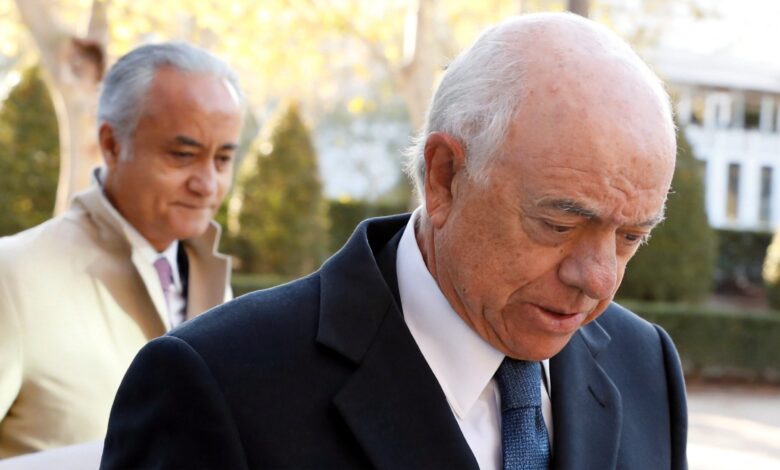
A high-profile court case in Spain is making headlines and could impact the entire country’s banking system. Prosecutors are seeking a 173-year prison sentence for former BBVA president Francisco González, accusing him of orchestrating surveillance and corruption. The case has become one of the most discussed in financial circles, as it is the first time such a major bank faces the threat of a substantial fine due to the actions of its leadership.
Investigators allege that BBVA’s management in 2004–2005 hired former police officer José Manuel Villarejo to gather information on competitors and debtors. According to prosecutors, the bank paid nearly one million euros for services provided by Cenyt, a company linked to Villarejo. This led to illegal wiretapping and data collection targeting several prominent entrepreneurs and organizations, including efforts to prevent a takeover of BBVA by Sacyr.
Bank liability
The charges focus in particular on BBVA’s lack of internal controls. Prosecutors state the bank failed to provide proper oversight of its president’s decisions, allowing a small group of top managers to make key choices without external supervision. As a result, BBVA could be found guilty as a legal entity and face a fine of €181.8 million.
Among the accused are not only Francisco González and Villarejo, but also former top executives of the bank, including Julio Corrochano, Antonio Béjar, José Manuel García Crespo, and Eduardo Arbisu. Some individuals involved, as noted by the prosecutor’s office, will not be held accountable due to health conditions or the statute of limitations; however, the investigation continues regarding other participants.
Surveillance mechanisms
According to the investigation, Villarejo used his connections in the police to access restricted databases and wiretapping tools. Targets included not only BBVA’s competitors, but also journalists and bank debtors. In particular, assets of prominent figures such as Fernando Martín and Luis Manuel Portillo were investigated. Additionally, Villarejo was tasked with gathering compromising information on Ausbanc to reduce pressure on the bank from this organization.
The prosecutor’s office stresses that the actions of Villarejo and his partners were carefully concealed from most BBVA employees. Decisions were made within a narrow circle, making it difficult to detect violations at an early stage. This factor has become one of the key arguments in the case against the bank as a legal entity.
Consequences for the sector
The BBVA case has become one of the largest corruption scandals in Spain’s banking sector in recent years. According to russpain.com, similar proceedings have already led to a review of corporate governance standards at other major companies in the country. For example, after investigations involving CaixaBank and Banco Popular, requirements for internal controls and operational transparency were tightened.
In recent years, Spanish courts have increasingly handled cases related to corporate responsibility and misconduct among senior executives. This reflects a growing public demand for transparency and accountability in business. The BBVA scandal could serve as a starting point for new reforms in the banking sector and for stricter oversight of the management of major companies.
Recalling recent events, it is worth noting that similar investigations targeting large financial institutions have already led to significant fines and changes in key personnel. In particular, cases against former executives of Bankia and Banco Popular resulted not only in court rulings but also in changes to the legislation governing banking activities. These developments demonstrate that Spain’s justice system is setting increasingly higher standards for corporate governance and transparency.