The anniversary of Terminal T4 at Adolfo Suárez Madrid-Barajas Airport has become a starting point for discussions about the future of air travel in Spain. Over the past two decades, this facility has not only transformed the capital’s transport infrastructure but also served as a catalyst for change across the country. Its opening changed established routes, increased comfort, and set new standards for passengers and airlines.
In 2026, T4 celebrates 20 years since its inauguration, but the road to this milestone was long and challenging. The design of the terminal began a decade before construction started, and the initial idea emerged almost thirty years ago. Architects Carlos Lamela, his father Antonio, and British architect Richard Rogers proposed a concept radically different from conventional airports. Their vision was to create a space where light, wood, and color would reduce stress and simplify navigation for passengers.
Architectural breakthrough
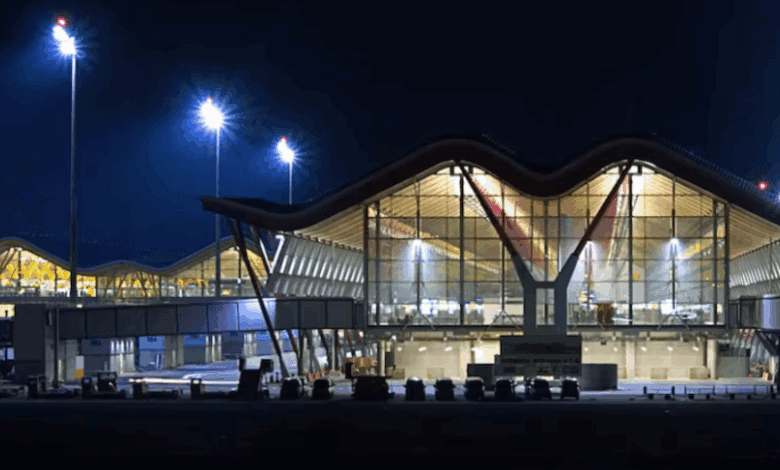
The main feature of T4 is its unique bamboo roof structure, which delivers not only visual lightness but also distinctive acoustics. Bamboo was chosen deliberately: it grows rapidly, is environmentally friendly, and combines strength with flexibility. This solution became a symbol of the terminal and set it apart from other airports worldwide. The interior is filled with natural light, while colorful columns help passengers easily navigate the boarding areas.
Instead of standard bright lamps, soft fixtures reminiscent of Eastern tableware shapes are used here. This approach helped create a tranquil atmosphere, which is especially valued in an age of constant stress and haste. The architects deliberately avoided complex layouts and confusing corridors, focusing on simplicity and logical movement.
Challenges and Solutions
Implementing such a large-scale project came with numerous challenges. Financing proved to be one of the main issues: the initial funding was insufficient to realize all the ideas. However, the team insisted on preserving key architectural solutions, despite budget constraints and external pressure. Competition among architecture firms was intense—over twenty renowned studios made it to the finals, but it was the concept by Lamela and Rogers that proved the most compelling.
During the design and construction phase, it was necessary to consider not only architectural but also political factors. Authorities explored alternative sites for the airport, but ultimately decided to expand the existing infrastructure. This even required altering the course of the Jarama River—a move that would be impossible today due to environmental regulations.
Spatial Transformation
Throughout the project, adjustments were made several times. For example, the satellite terminal was initially planned to be located closer to the main building, but it was ultimately placed between the two runways. This made it possible to optimize passenger flows and prepare the infrastructure for future expansion. The decision was also made to build an automated train to connect the terminals and to shift the main building to the south, which proved to be a strategically sound move.
Construction was completed in 2006, and the involvement of the country’s largest construction companies ensured high-quality work. The terminal became not only a transport hub but also an architectural landmark, recognized by both industry professionals and regular travelers. Over the years, T4 has become a symbol of modern Madrid, and its design stands as a benchmark for new projects.
Future Prospects and Challenges
In the coming years, the airport is set for a large-scale modernization. The plan is to increase capacity to 90 million passengers per year, which will require investments of 4 billion euros. Expansion will affect not only T4, but also terminals T1, T2, and T3, where a new passenger processing facility will be added. An additional 540 meters of space will help handle the growing number of travelers and maintain competitiveness in the European market.
These changes will inevitably impact the regional economy, create new jobs, and strengthen Madrid’s position as one of Europe’s leading aviation hubs. However, projects of such magnitude always involve risks—from construction delays to the need to meet future environmental and technological requirements.
In recent years, Europe has seen a trend toward upgrading major transport hubs. For example, airports in Paris and London have also undergone extensive renovations, enabling them to increase passenger capacity and enhance service levels. In Spain, the modernization of Barcelona and Bilbao responded to rising market demands. These projects demonstrated that investment in infrastructure can not only transform a city’s appearance but also drive economic growth. In the context of global competition, such measures have become essential to maintain leadership on the international stage.