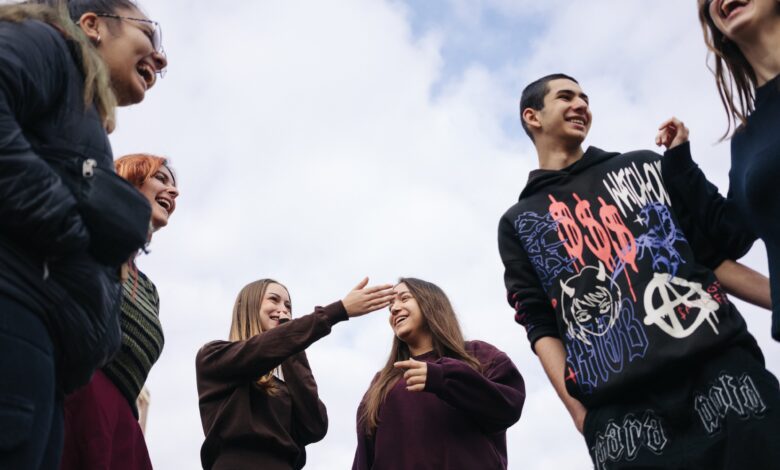
A new exhibition in Barcelona is challenging Spaniards’ views of modern youth. At its core are true stories and emotions shared openly by teenagers, who present themselves without the usual social masks. The project, gathering 300 participants from Catalonia, Lithuania, and Romania, has become one of the largest collective portraits of Generation Z in Europe. In Spain, it’s more than a cultural event: it raises important questions about how young people build their identities and why their worldview often differs from that of adults.
The exhibition “Tenemos 17 años. Un retrato colectivo” at the Centre de Cultura Contemporània de Barcelona (CCCB) has become a platform for honest dialogue between teenagers and society. Young participants admitted that on social media, they usually show only the best sides of their lives, but among friends, they allow themselves to be authentic. This contrast between virtual and real identity is at the heart of the exhibition. According to El Pais, the organizers did not set out to spark debate on politics or hot social issues—the focus is on personal experiences, dreams, fears, and disappointments.
Personal space
A key part of the exhibition features photographs, video works, and texts created by the teenagers themselves. Visitors can see not only the participants’ portraits, but also their rooms, yards, and the streets where they spend their time. One of the CCCB halls has mattresses arranged so that guests can experience the typical atmosphere of youth. Here, conversations about friendship, late-night confessions, stories from the beach and the park are heard—everything creates a sense of presence and allows a glimpse into the world of teenagers from within.
Work on the project lasted several months. The young people were accompanied by professionals from the world of film, photography, and theater, who helped them find self-expression through art. Many drew inspiration from the album “El libro de los amigos” by filmmaker and photographer Johan van der Keuken, presented in Barcelona for the first time. Back in 1955, the author captured his teenage friends in this work, which became the starting point for the contemporary project.
Voice of a generation
Participants note that the exhibition offers a more honest and profound perspective on their lives than is usually shown in the media. According to one of the girls, no one here tries to fit into someone else’s expectations—everyone expresses themselves the way they want. This approach sets the project apart from most traditional youth exhibitions, which often reflect only the adults’ point of view. At CCCB, teenagers themselves became both the authors and protagonists of their own stories.
The exhibition features not only photographs and videos but also installations created in collaboration with renowned artists and musicians. Among them are sound works by Xavier Bobés and Albert Coma, as well as an audiovisual project by Martí Madaula. A special highlight is the final installation, accompanied by music composed by the teenagers themselves with the support of the Xamfrà school. Here, visitors can leave their messages on the wall, much like what is often done in clubs and at parties.
New formats
The exhibition at CCCB is not the only example of how young people across Europe are searching for new ways to express themselves. In recent years, projects have emerged in Spain and other countries where teenagers are not just the subjects, but also the creators of cultural initiatives. For instance, a recent meeting of international school directors in Murcia focused on new approaches to education and youth development. To learn more about the impact of such events on educational environments, see the article about the closed meeting of school leaders at ELIS Murcia.
As reported by El Pais, the exhibition “Tenemos 17 años” is the result of a collaboration between the cultural association A Bao A Qu and researcher Érika Goyarrola. The project included illustrator Núria Inés (Tintafina), director Jaume Claret Muxart, and other well-known figures from the arts. The focus was to ensure every participant could express their thoughts and feelings freely, without pressure from adults or society.
In recent years, collective projects have become increasingly common in Spain and across Europe, where young people themselves choose the topics and format of dialogue with society. Such initiatives not only help us better understand the new generation but also uncover hidden issues related to self-esteem, relationships, and self-discovery. In 2025, Madrid hosted a similar exhibition where teenagers shared their experiences of life in the metropolis through photography and short films. Lisbon and Paris have also implemented projects focusing on the inner world of youth. These events demonstrate the growing interest in authentic stories of young people, and new formats are helping their voices be heard.