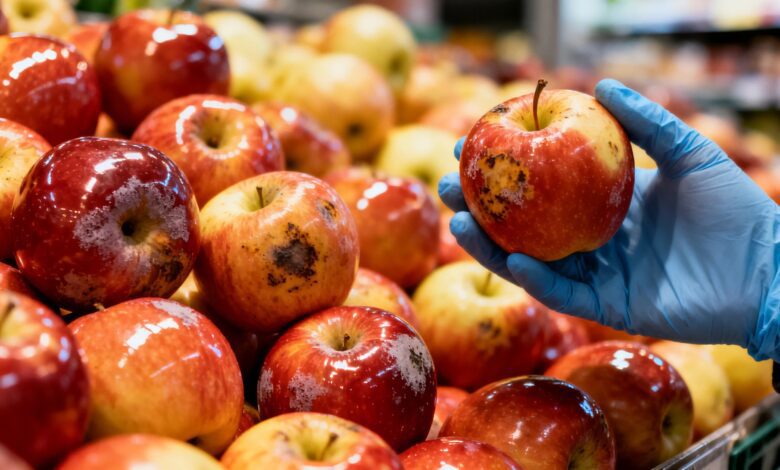
The results of a new study conducted by PAN Europe and several European organizations have raised concerns for Spanish families. Virtually every apple on store shelves contains traces of chemicals that may pose a health risk. The issue is especially serious for parents choosing fruit for children: according to russpain.com, most samples do not meet safety standards for children’s food.
Experts examined 59 batches of apples from 13 countries, including Spain. Residues of at least one pesticide were found in 93% of samples, and several types were detected in 85%. In some cases, up to seven different chemicals were present in a single batch. There is particular concern about substances considered the most toxic in the EU, as well as compounds from the PFAS group and neurotoxic components.
Unexpected discoveries
The analysis revealed that 71% of apples contained at least one especially hazardous pesticide, and 64% had PFAS compounds, which are notable for their resistance and ability to accumulate in the body. Neurotoxic substances that can negatively affect the nervous system were found in 36% of batches. The situation in Spain proved even more troubling: all apples tested contained pesticide residues, and PFAS and neurotoxins were detected in 60% of batches.
Particular attention was given to the substance fludioxonil, which was recognized as an endocrine disruptor in the EU in 2024. It was found in almost 40% of samples. Despite its acknowledged danger, a ban on the use of this pesticide has not yet been introduced, raising questions about the effectiveness of food safety controls.
Multiple exposure
The PAN Europe study highlights that risk assessments are usually performed for each pesticide individually, but in reality, consumers are exposed to their combinations. Such a ‘cocktail’ can amplify negative health effects, especially in children or people with chronic illnesses. Scientists note that growing evidence points to a link between repeated pesticide exposure and reproductive disorders.
If these apples were intended for baby food production, 93% of the batches would not meet European safety standards. This is due to exceeding the permissible residue level of 0.01 mg/kg. Specialists therefore recommend choosing organic fruit or thoroughly peeling the skin before eating.
Regulatory gaps
According to PAN Europe, some of the substances detected should have been banned in the EU due to their high toxicity. However, in practice, such chemicals continue to be used, highlighting the insufficient effectiveness of existing laws and control procedures. Organizations are calling for the development of new methods that take into account the combined impact of multiple pesticides at once to be accelerated.
In Spain, this issue is gaining momentum, as the country is among the largest fruit producers in Europe. Food safety concerns are becoming increasingly relevant amid rising rates of chronic diseases and growing attention to nutrition quality.
Context and recent developments
In recent years, Europe has repeatedly reported cases of hazardous pesticide residues found in fruits and vegetables. In 2025, similar inspections detected exceeding limits in strawberries and grapes, leading to tighter border controls and a review of several standards. In Spain, initiatives to introduce stricter rules for producers and importers are already being discussed, along with expanding the list of banned substances. These measures aim to reduce health risks and strengthen confidence in food quality on the market.