In the small Andalusian town of Aljaraque, time seems to have stopped after the devastating train disaster in Adamuz (Córdoba). In a single night, four members of one family were lost: 43-year-old Pepe Zamorano, his wife Cristina Álvarez, their 12-year-old son Pepe, and their 22-year-old nephew Félix. The tragedy shrouded not only their loved ones, but the entire town where everyone knew this family. Hundreds of people struggled to believe what had happened—pain and confusion hung in the air like a thick fog.
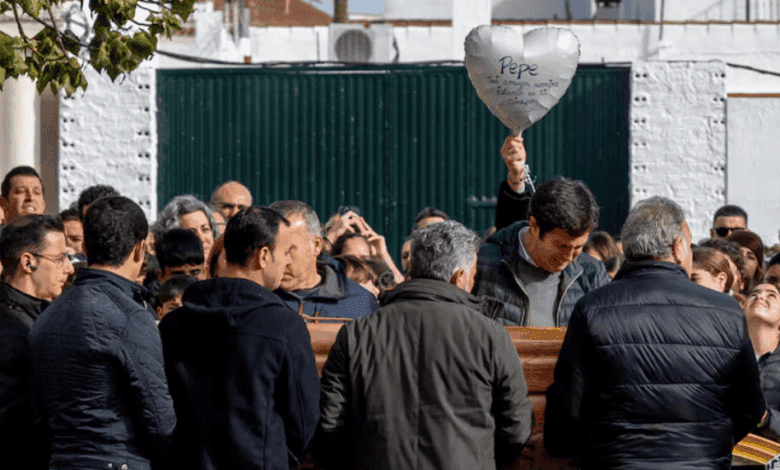
The morning after the tragedy was especially difficult. Around two thousand residents from Aljaraque and nearby Punta Umbría, where Cristina was born and ran her business, gathered at the municipal sports complex. The farewell ceremony took place here, and even the spacious halls couldn’t contain all the grief. People stood shoulder to shoulder, many unable to hold back their tears, and the tension in the air was so heavy it felt as if the atmosphere itself might burst from emotion.
Their Final Journey
At the center of the hall stood four coffins, each one with white balloons floating above—symbols of remembrance and hope. The classmates of 12-year-old Pepe, who had come to say goodbye to their friend, held the balloons in their hands. When the ceremony ended, the balloons soared skyward, followed by the gazes and tears of all present. One of the teachers from Pepe’s school called out loudly: “For Pepe!”—a cry that became the signal for hundreds of people to let the balloons go, releasing their emotions. The applause that erupted in that moment was not so much a show of support as a desperate attempt to cope with the pain.
Inside the sports complex, silence reigned, broken only by sobs and prayers. The ceremony was conducted by priests from Aljaraque and Punta Umbría, with mayors from both cities, local officials, and even delegates from the Andalusian government in attendance. Yet no amount of official presence could ease the suffering of those who had lost loved ones. The pain was especially overwhelming for Félix’s mother and Pepe’s grieving sister—their cries and wails echoed beneath the vaulted ceiling, striking even the most stoic observers.
Shock and accusations
The bereaved family found themselves at the center not only of grief, but also of anger. In just four days, they had lived through hell: first, the hope that Pepe and Cristina’s six-year-old daughter had survived after she managed to escape the wrecked carriage on her own. Then came the agonizing wait for news about other family members, false rumors that Pepe’s son was in the hospital, and, finally, the confirmation of the unimaginable—all four had died.
At that moment, grief gave way to fury. One relative, unable to hold back, lashed out at the railway company Adif and even the journalists filming the scene. “They are to blame! Write it down, don’t cut it! And you are guilty too!” he shouted as the coffins were carried to the hearses. His words were a cry from the depths of his soul, a desperate attempt to find someone accountable for the tragedy.
A city in mourning
Aljaraque and Punta Umbría have been plunged into mourning. Even after the funeral, people lingered, discussing the details of the tragedy, sharing memories of those lost, and trying to understand how to move forward. Many admitted that death is a familiar part of life, but no one was prepared for such injustice and sudden loss. It felt as if the city itself had lost a piece of its soul, and that feeling would not let go for a moment.
These days have made it clear: the tragedy brought people together, yet left a deep wound that is unlikely to ever heal. Many believe those responsible must be found, and the memory of the victims must be preserved. For now, Aljaraque remains silent, filled with pain and questions that have no answers.