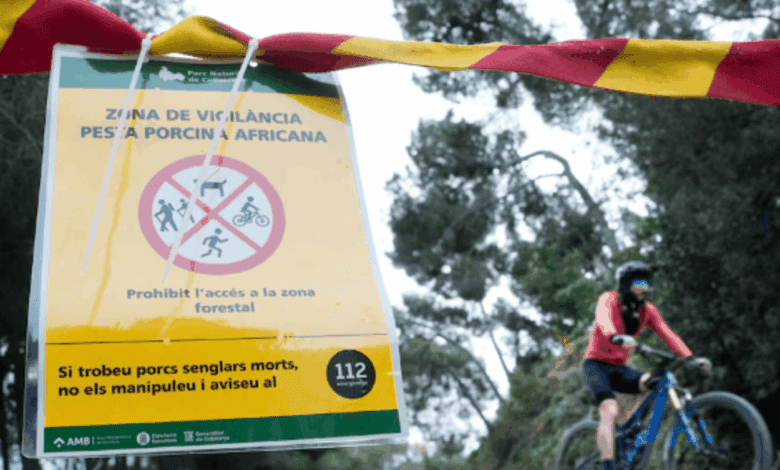
A case of African swine fever has been detected in Catalonia for the first time in three decades. The virus was found in wild boar in the Collserola Natural Park, near Barcelona. Within a short period, the number of infected animals rose to 14, raising concerns among experts and local residents. Authorities immediately implemented a series of containment measures to prevent the infection from spreading to other regions of the country.
The situation is complicated by the fact that the exact source of the infection has not yet been identified. One theory being considered is the introduction of contaminated food waste into the wild. According to regional government officials, it could be as simple as a discarded ham sandwich or another meat product carrying the virus. Collserola is a busy area, crossed by highways, with recreation areas and service facilities, which increases the risk of dangerous waste accidentally ending up in the environment.
Tracing the source
Catalonia’s veterinary services, working together with military specialists, are investigating how the virus entered the wild boar population. Genetic analysis of samples should help determine whether the strain matches known variants from other countries, such as Georgia or Italy. At this stage, all possibilities are being considered, but experts are leaning toward the so-called ‘sandwich theory’—that the virus enters the environment through food waste left by people.
Experts emphasize that African swine fever poses no danger to humans, but represents a serious threat to agriculture. The virus spreads easily among animals, especially in areas with high population density. It is estimated that around 900 wild boars live in Collserola, and they can migrate to neighboring municipalities, making it more difficult to control the situation.
Restrictions and measures
In response to the outbreak, Catalan authorities have decided to temporarily close Collserola Natural Park to visitors. Feeding animals and touching dead specimens is prohibited. These measures aim to minimize contact between people and wildlife, and to prevent further spread of the virus.
Particular attention is being paid to pig farms located within a six-kilometer radius of the outbreak. All 39 farms have undergone laboratory testing, with results coming back negative. Nevertheless, strict restrictions have been imposed: the movement of animals and products is banned, sanitary procedures have been intensified, and regular disinfection of vehicles and equipment is being carried out. These measures will remain in place for at least a year, in line with European biosafety standards.
Economic risks
The agricultural sector of Catalonia and all of Spain is closely monitoring the situation. Pork export is one of the region’s key sources of revenue, and even a single case of African swine fever could result in significant economic losses. The Ministry of Agriculture has stated it is ready to support producers and minimize any potential damages.
Veterinarians and biosecurity experts remind both residents and visitors of the region to follow basic rules: do not dispose of food waste in the forest, do not feed wild animals, and avoid approaching them. Only collective efforts can help stop the spread of this dangerous virus and protect both wildlife and farms.