AMD technologies: a new era in gaming graphics
The gaming industry is in a relentless race for image realism. With the arrival of ray tracing, developers faced a dilemma: visuals became more stunning, but new issues arose with performance and image noise. AMD decided to tackle this by introducing FSR Ray Regeneration—a technology making its debut in Call of Duty: Black Ops 7.
FSR Ray Regeneration is more than just another filter or upscaling method. The system uses artificial intelligence to remove noise created during ray tracing. Unlike traditional algorithms that rely on fixed rules, AMD’s innovation is trained on vast image datasets, allowing it to clean up artifacts more efficiently and accurately.
Key features and limitations of the new function
This technology is part of the FSR Redstone suite, which AMD promotes as a comprehensive neural network-based solution for boosted graphical quality. In Black Ops 7, FSR Ray Regeneration handles reflections and shadows before upscaling and frame generation, resulting in sharper, more stable visuals without the typical flickering and distortions of ray tracing.
However, only owners of Radeon RX 9000 graphics cards will be able to use the new feature. Earlier models, even those supporting previous versions of FSR, do not currently have access to this functionality. AMD does not rule out the possibility that other components of Redstone will also be limited to the latest devices, although no official statements have been made so far.
Competition with NVIDIA and future prospects
The arrival of FSR Ray Regeneration intensifies competition between AMD and NVIDIA, which already offers its own AI-based ray tracing solutions—such as DLSS 3.5. Unlike its rival’s closed architecture, AMD traditionally emphasizes openness for developers, although in this case, the technology is a timed exclusive for certain hardware.
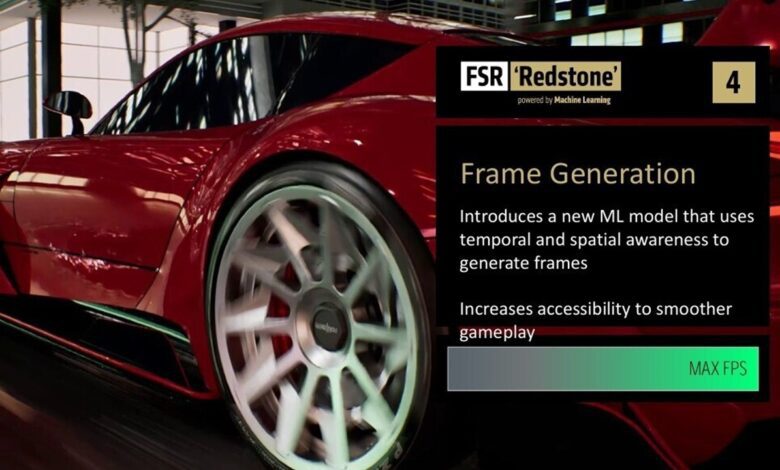
In the future, AMD plans to expand the capabilities of FSR Redstone by adding features like frame generation and neural network-powered lighting cache. This should further enhance graphics quality and optimize game performance on new graphics cards. These solutions are expected to be used not only in major titles, but also by independent studios.
Market impact and gamer expectations
The launch of FSR Ray Regeneration in Black Ops 7 could be a turning point for the widespread adoption of similar technologies in the gaming industry. For users, this means smoother gameplay and improved visual quality without sacrificing performance. At the same time, hardware compatibility limits may raise concerns among owners of older graphics cards.
AMD is betting on the development of artificial intelligence in graphics technology, aiming to provide the market with tools that will enable developers to create more realistic and efficient visual effects. In the coming months, it will become clear how quickly the industry will adopt these new standards and how competitors will respond.