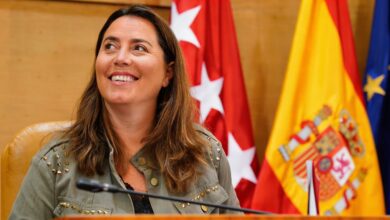
On Monday, dozens of influential figures—ranging from business leaders to politicians and cultural icons—gathered in the heart of Madrid. The occasion was the launch of a new civic platform, Andalucía 27, which, according to its organizers, aims to become the voice of Andalucía on the national stage. The presence of the region’s president, Juanma Moreno, immediately raised the profile of the event.
Andalucía is a region with a rich history and an immense cultural legacy, yet many believe its real influence in Spain’s economic and strategic matters still falls short of its potential. This sense of underrepresentation has driven a group of prominent Andalusians, long established in Madrid, to create a new organization aiming to change that balance.
Leadership and Ambitions
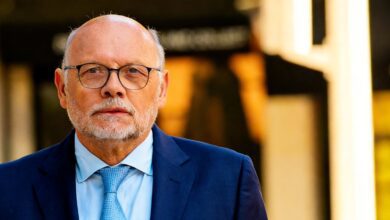
Federico Linares leads Andalucía 27, serving as head of the Spanish division of EY (Ernst & Young) and as chairman of the Social Council of the University of Cádiz. Well-known in business circles, he received the Medal of Andalucía last year. Joining him in founding the platform are entrepreneurs Rosauro Varo, president of GAT Inversiones, and José María Pacheco, founder of Konecta, as well as Antonio Pulido and José Luis García-Palacios, who chair major regional funds and banks.
From the outset, organizers emphasize that this is not about politics, but a civic initiative bringing together representatives from business, culture, education, and the third sector. Andalucía 27 positions itself as a platform for dialogue and for advancing the region’s interests without partisan rhetoric, but with a clear goal—to make Andalucía more visible on the national stage across Spain.
Сильные союзники
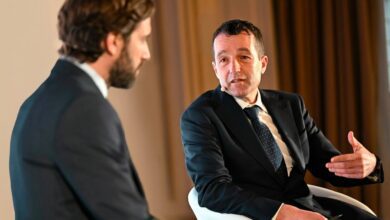
The presentation at Madrid’s Ateneo brought together top executives from the country’s largest companies, including Acciona, Bankinter, Banca March, Criteria, Mapfre, Enagás, Redeia, Merlin Properties, BMW, HM Hospitales, Ericsson, and Microsoft. The event was hosted by journalist Teodoro León-Gross. The atmosphere was businesslike yet informal—many guests clearly felt they were witnessing the launch of something truly significant.
Among the first ‘ambassadors’ of the platform are musician Alejandro Sanz, singer José Mercé, former minister Fátima Báñez, dancer Sara Baras, TV host Sandra Golpe, human rights activist Cruz Sánchez de Lara, chef Ángel León, astrophysicist Juan Pérez Mercader, lawyer Javier García Carranza, politician Carmen Calvo, Olympic champion Carolina Marín, and lawyer Santiago Muñoz Machado. This lineup speaks for itself: the platform aims for broad reach and impact.
Structure and focus areas
The project will be led by Ignacio Moreno, former editor-in-chief of La Voz de Cádiz. All activities of Andalucía 27 are divided into five key areas: economy and business; entrepreneurship and innovation; education and talent development; culture, gastronomy and sport; and the third sector and social impact.
The platform offers three forms of participation: “Andalucíans 27” are those who live and work in Madrid; “Lighthouses of Andalucía” refers to natives of the region who have made their mark in other provinces or abroad; and “Andalusian Soul” recognizes people not born in Andalucía but closely connected to it. This approach brings together a diverse community united by a common idea.
First steps
One of the first initiatives will be the launch of the Andalucía Prosperity Index (IPA)—a tool designed to assess the region’s actual well-being across a range of parameters. This index should serve as a benchmark for analyzing and adjusting regional policy, as well as an argument in national debates.
Organizers emphasize that Andalucía 27 does not seek to compete with other regions or stand against anyone. The main goal is to strengthen Andalucía’s role as a unifying force in Spain, where political and territorial divisions are being felt more acutely. In their view, it is precisely the diversity, scale, and geographic position of the region that give it the chance to become a magnet for the entire country.
A new role for the region
The emergence of Andalucía 27 is an attempt to bring together talent, resources, and ambition under one roof—so that the region is not just a “cultural capital” but a real player in Spain’s economic and social life. There is no place here for party slogans, but there is a clear desire to shape the country’s future. The initiative feels fresh and timely, especially against the backdrop of increasing fragmentation and the search for new foundations for national unity.