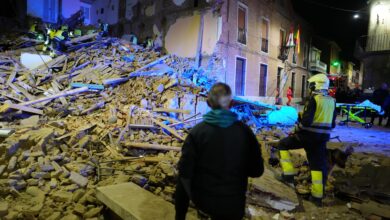
The recent natural disasters in Andalucía have become a wake-up call for all of Spain. Heavy rains and sudden floods that recently hit the region have revealed just how vulnerable local communities and the economy are to climate change. The regional authorities are demanding not only urgent financial support from the European Union but also a reassessment of water resource management policies to prevent similar situations from happening again.
According to Ale Espanol, the President of the Andalusian government, Juanma Moreno, addressed Brussels with a proposal to designate the region as a testing ground for new measures to address the effects of climate change. He recalled that just three years ago, Andalucía suffered from severe water shortages, and now faces the opposite problem—devastating floods that forced the evacuation of Grazalema and other settlements.
Moreno emphasized that such stark weather contrasts require a flexible and long-term strategy from the European Union. He insists on creating a unified water resource distribution system between countries and regions, so that part of the European funds can be used for the construction and modernization of hydraulic infrastructure. In his view, this is the only way to ensure sustainable agricultural development and protect the southern Spanish economy from further shocks.
Water and the economy
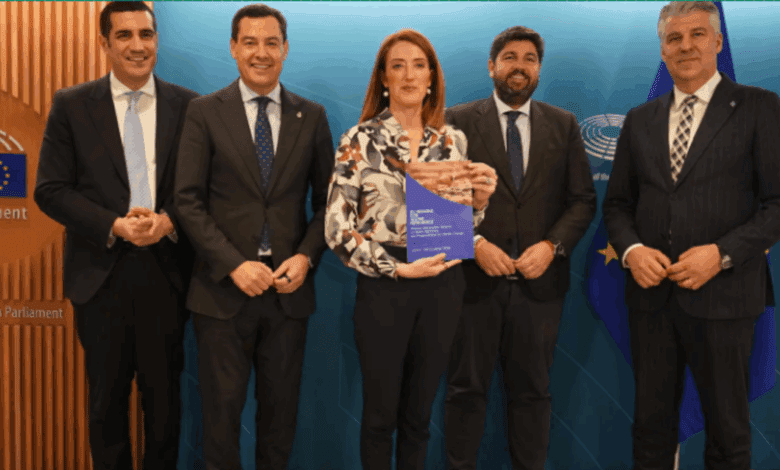
During meetings with representatives of the EU Committee of the Regions, co-chaired by Moreno and Hungarian politician Kata Tütto, specific support measures were discussed to restore Andalusia’s economy after natural disasters. Special attention was paid to the agricultural sector, which supplies food to hundreds of millions of Europeans. Moreno proposed that the European Commission launch new aid programs for farmers and businesses affected by weather-related catastrophes.
An important step was the Committee of the Regions’ approval of a report on water resilience. The document emphasizes that European water policy should take into account the unique characteristics of each region. Moreno secured the right for Andalusia to participate in the planning and management of water resources on an equal footing with other European territories. To this end, a special platform will be created, bringing together representatives of the European Commission and regional authorities.
According to Ale Espanol, the head of Andalusia is convinced that only direct regional involvement in decision-making will allow for effective responses to climate challenges. He believes that without this, food security and economic stability cannot be ensured in the long run.
The risk of centralization
However, Moreno voiced concerns about potential changes in the allocation of European funds. He warned that the new EU financial plan could lead to a centralization of resources, depriving regions of the ability to independently direct money toward the issues most relevant to them. According to the politician, this poses a threat to the rapid response needed for emergencies like those that recently occurred in Andalusia.
Moreno insists on preserving the regions’ right to request funding directly and manage allocated resources independently. He noted that the European Parliament supports this approach and called any attempt to limit local authorities’ autonomy a mistake, especially amid global instability. As an example, he recalled the recent conflict in Valencia surrounding municipal initiatives, when local authorities faced restrictions on implementing their own decisions, as described in the report on disputes over city campaigns.
In conclusion, Moreno called on the European Union not only to increase support, but also to give regions more autonomy in distributing funds. He believes that only in this way can residents’ interests be effectively protected and new crises prevented.
Context and consequences
In recent years, Spain has increasingly faced extreme weather events. Droughts give way to heavy rains, and agriculture suffers from climate instability. In 2024, similar challenges were observed in Cataluña and Murcia, where farmers also demanded a review of European water distribution regulations. In other EU countries, such as France and Italy, local authorities have already secured the right to participate in water policy planning. These changes demonstrate that the management of natural resources is becoming a crucial issue for the region’s future. Decisions made today will determine how resilient the economy of Spain and other Southern European countries will be in the coming years.