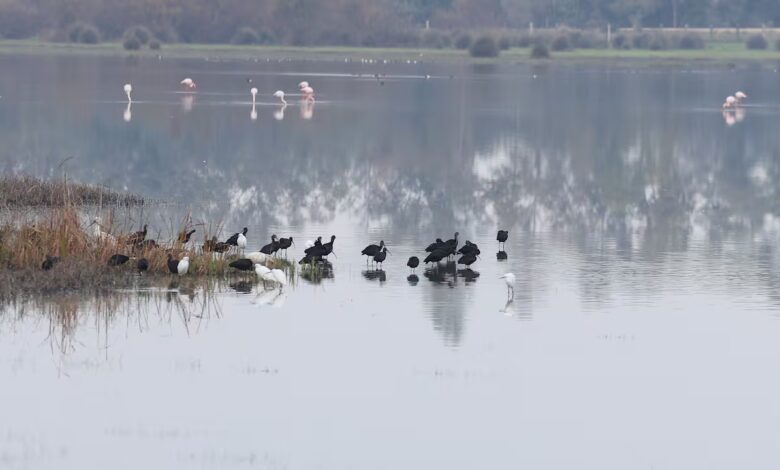
New cases of H5N1 virus infection have been detected among wild birds in the Doñana Natural Park in southern Spain. In response, the government of Andalucía has decided to implement the second level of preventive measures to contain the spread of the infection.
Outbreaks have been identified in several locations: in the municipality of Aznalcázar (Seville), a sick grebe was found, and in the Caño Cardales area (Ínhos, Huelva province), a heron and a red-crested pochard were discovered. Additionally, a mallard with a confirmed diagnosis was found in one of the local lagoons. All these cases are associated with the H5N1 serotype, commonly known as avian influenza.
The implemented protocol includes enhanced monitoring of live and dead birds arriving from provinces where outbreaks have already been recorded. In addition, there is a system in place for collecting and temporarily storing carcasses under strict sanitary regulations before they are handed over to specialized companies for disposal.
Different approaches are in place for affected birds: rare species are sent to rehabilitation centers, while standard sanitary procedures apply to the rest. Authorities emphasize that these measures enable a prompt response to threats, protecting vulnerable species, public health, and natural ecosystems.
Experts say that the avian influenza virus is widespread throughout the country. The key measure of control is biosecurity, although it is impossible to completely prevent transmission among wild animals.
Environmental organizations supported the actions of regional authorities but expressed concern that measures were not taken immediately. According to their data, over 70 geese died from bird flu in the Doñana area last week.
In Seville, after the virus was detected in ducks at the Tamarguillo park lagoon, the municipality closed several city parks. In recent days, dead birds—including peacocks and ducks—were found there and sent for testing to confirm the diagnosis.
Medical services are monitoring people who were in contact with infected animals. So far, all tests for the virus have been negative.
Environmentalists note that Doñana lies along the migratory route of birds, and an influx of new individuals from Europe and Africa may occur soon, increasing the risk of infection spreading. A biological station operates in the park, where specialists continue sampling and monitoring the situation.
Experts believe it is necessary to wait for the results of the studies in order to assess the level of risk and, if needed, adjust the measures. Possible solutions include a temporary hunting ban to prevent the virus from spreading to humans.
Andalusian authorities recommend not touching dead or sick birds and to contact specialists or emergency services if such cases are discovered.