A new debate over inheritance tax has erupted in Spain as an Andalusian court questions the conventional tax authority procedure: from now on, cash deposits, shares, and company stakes can no longer be automatically included when determining the value of a deceased person’s household goods. This decision has dealt a serious blow to tax officials, who for years used a flat percentage to calculate inheritance tax—without analyzing the composition of each estate.
The spotlight fell on a case where nearly all of the inheritance consisted of financial assets, rather than household items or personal belongings. The authorities, without hesitation, applied the standard 3% to the total estate, leading to a significant increase in the taxable base. However, the court sided with the heiress, ruling that this practice aligns neither with the letter of the law nor with common sense.
Legal details
The Inheritance and Gift Tax Law (Ley 29/1987) states that household goods are valued at 3% of the net value of the estate, unless proven otherwise. But what exactly counts as ‘household goods’? The judges clarified: it refers exclusively to movable possessions used for the deceased’s daily life or personal purposes. Financial instruments, bank deposits, shares, and business stakes have no relation to household goods and cannot be factored into this calculation.
In this case, the main part of the inheritance—over 7.6 million euros—consisted of corporate shares and bank accounts. The court ruled that including these amounts when calculating household property artificially inflates the tax burden. As a result, the tax authorities are required to recalculate, excluding from the base all assets not related to the household.
Arguments of the Parties
The heir challenging the tax authorities’ actions submitted detailed documents: an inventory of property, bank statements, and proof of the inheritance structure. She maintained that there were almost no valuable household items in the deceased’s home, and that most of the assets were money and securities. The court agreed, emphasizing that the tax authority cannot automatically apply a 3% rate to the entire inheritance without considering its actual composition.
Case law from the Supreme Court of Spain (Sentencia del Tribunal Supremo núm. 1.160/2022) also confirms that household property only refers to belongings used for personal needs or for furnishing the home. Everything else is excluded. This gives heirs a powerful tool to protect their interests and reduce their tax burden.
Practical Implications
A court decision in Andalusia could set a precedent for the entire country. Now, heirs who mostly inherit financial assets can request a review of their tax calculations. It is enough to provide evidence that there are no or almost no household items in the estate to avoid the automatic 3% being added to the full amount.
For the tax authorities, this means a need for more thorough verification of estate contents and moving away from universal schemes. However, experts warn that tax authorities may try to contest the new practice or tighten evidence requirements for heirs.
Market impact
Economists are already calculating potential budget losses. If this practice spreads, the state may lose out on millions of euros annually. On the other hand, for heirs—especially those inheriting shares, stakes in companies, or large deposits—this is a chance to significantly reduce their tax payments.
Lawyers advise: when processing inheritance, it is wise to prepare documents confirming the structure of assets in advance. The more detailed the inventory, the higher the chances of successfully challenging the tax calculations. However, don’t forget: each case is unique, and much depends on the position of the specific court.
What heirs need to know
If the inheritance mainly consists of financial assets and there are virtually no household items, heirs have the right to demand exclusion of such assets from the calculation of household property. Not only inventories but also photographs, expert reports, bank statements, and even witness testimony can serve as evidence. The key is to clearly demonstrate that the standard 3% does not reflect the actual situation.
However, there’s no reason to relax just yet. The tax authorities may request additional documents or conduct their own inspection. But now heirs have a strong argument: judicial practice is on their side, and the automatic application of 3% to shares and money no longer applies.
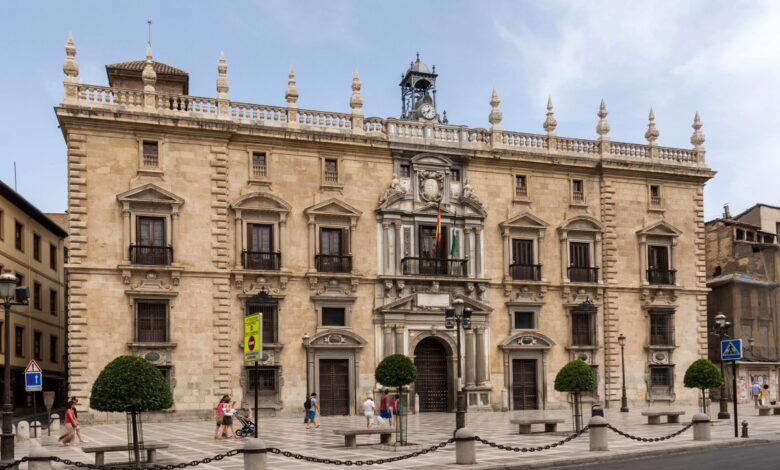
RUSSPAIN reminds readers that the Tribunal Superior de Justicia de Andalucía is one of the region’s key courts, handling disputes between citizens and government bodies. Its decisions often set a precedent for other courts in Spain. In recent years, this court has repeatedly made high-profile rulings on taxation, inheritance, and property disputes, playing a major role in shaping national legal practice.