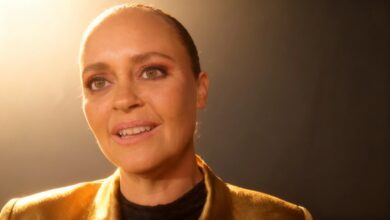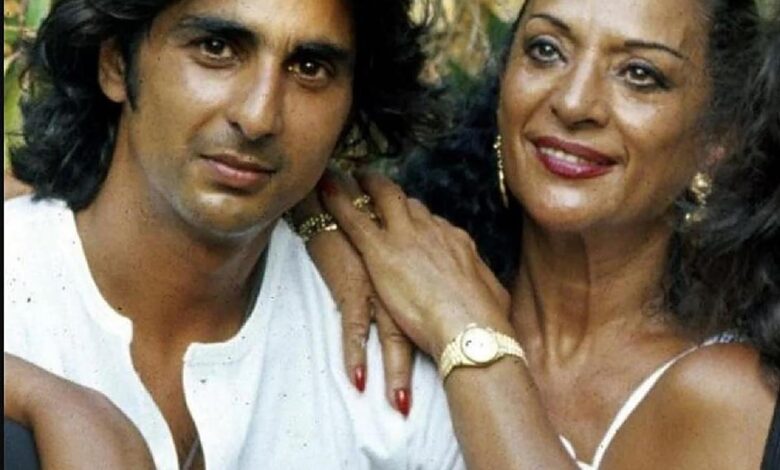
Thirty years after the passing of Antonio Flores, his daughter, actress Alba Flores, has presented a documentary film honoring his memory. The project, titled “Flores para Antonio,” became both a deeply personal and transformative experience for her, offering a new perspective on her own story and her family’s history. The film takes viewers on a unique journey into the world of the musician, revealing his creative legacy and personal struggles.
The film was directed by Isaki Lacuesta and Elena Molina, who brought together the memories of Antonio’s closest circle. Sharing their thoughts are his sisters Lolita and Rosario Flores, his former wife Ana Villa, as well as friends and fellow artists, including Antonio Carmona, Ariel Rot, and Joaquín Sabina.
The documentary is built on previously unpublished material: home videos, photographs, drawings, and archival footage. The soundtrack, featuring hits such as “No dudaría” and “La espina,” accompanies Alba as she seeks answers to questions that have haunted her for years. She strives to understand not only her father’s artistic journey, but also the reasons behind his tragic death, which left a deep wound in the hearts of his loved ones.
Antonio Flores passed away at the age of 33, just two weeks after the death of his mother, the legendary Lola Flores. His body was found in a guest house next to the family villa “El Lerele.” For nine-year-old Alba at the time, it was a double tragedy. In the film, she shares for the first time previously unknown details from the autopsy report: “Cardiac arrest. Drug intoxication. Accident. You were found in bed, resting, as if you were simply sleeping.”
The period between his mother’s death and his own became a time of unbearable grief for the musician. He was incredibly close to Lola and couldn’t accept her loss. Overwhelmed by sorrow, he was unable to attend her funeral at the La Almudena cemetery. Lolita Flores recalled how her brother would call her and say: “I can’t live without her. I adore my daughter, but I miss my light.”
Trying to distract himself from the pain, Antonio threw himself into his work. Just four days before his death, he performed his final concert in Pamplona, where he presented his album “Cosas mías.” At the performance on May 26, with his arm in a cast, the musician dedicated the show to his mother.
The film addresses Antonio’s addiction to illegal substances without sugarcoating it. Alba lists what was found in her father’s system: “Opiates, cocaine, analgesics, anxiolytics, and alcohol.” In a conversation with Ariel Rot, she tries to understand what exactly attracted her father to drugs. “I don’t want to talk about the ‘benefits’ of heroin,” replies the former Los Rodríguez member, “but I think it gave him a certain calm. It allowed him to forget who he was and how others saw him.”
Antonio spent his last days in a difficult state, suffering from insomnia and abusing the tranquilizers prescribed to him. On the evening of May 29, he was with his sister Rosario and friends. It was his friend Irene Vázquez who helped him go to bed in his small house. She was also the one who found him lifeless the next morning.
The pain of loss was so overwhelming that, as Alba admits, she “did not speak about her father’s death for thirty years.” Making the film became a kind of catharsis for her. Afterwards, she and her family held a special ritual, asking their ancestors for permission to “live longer” than her father. This helped her grow up and see her story from a new perspective.
Incidentally, Antonio González Flores was a prominent figure in a renowned artistic family. The son of legendary dancer and singer Lola Flores (“La Faraona”) and guitarist Antonio González (“El Pescaílla”), he was immersed in the world of music and the arts from an early age. His sisters, Lolita and Rosario, also became well-known singers and actresses. Over his short career, Antonio managed to release several albums, becoming one of the icons of Spanish rock in the 1980s and 90s. His songs, such as “Siete vidas” and “Cosas mías,” remain hugely popular in Spain to this day.