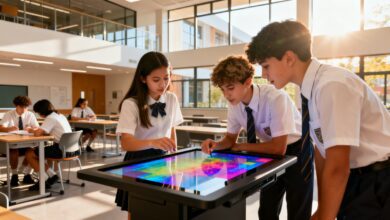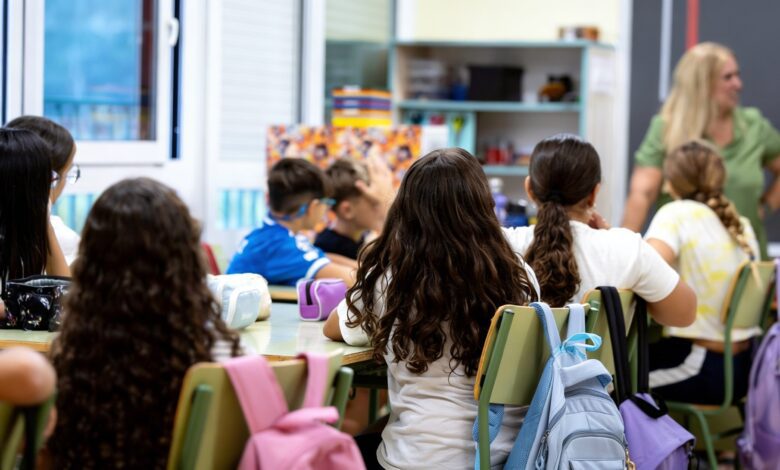
The Aragon government’s decision to reduce the time students spend using digital devices in schools has become one of the most discussed issues in Spain’s education sector. The new regulations, which will take effect in 2027, directly affect the interests of families, educators, and students themselves. Regional authorities explain these changes as necessary to reduce the impact of screens on children’s health and development, and to bring traditional paper materials back into the learning process.
According to the document published in the Boletín Oficial de Aragón, starting from the new academic year, students of different age groups will face restrictions on digital device use. Preschoolers are limited to one hour per week, primary students to two hours, and students in fourth to sixth grade to four hours. In secondary school (ESO), the limit is five hours per week, while older students may use digital devices up to ten hours a week, equivalent to two hours a day. At the same time, digital resources will only supplement paper textbooks, and homework is recommended to be completed exclusively on paper.
Reasons for the changes
The interim government led by Jorge Azcón, despite the lack of final political agreements, has decided not to delay the reform. According to acting Education Adviser Tomasa Hernández, the goal of the changes is to restore the balance between traditional and modern teaching methods. Authorities emphasize that this is not a complete rejection of technology, but an effort to find a sensible balance to avoid negative effects on children’s cognitive and social development.
As El Pais notes, the initiative emerged amid growing concerns from parents and experts about the impact of screens on the mental health and wellbeing of students. The region already had a ban on mobile phone use in schools, which most families supported. The new step is a logical extension of the policy to limit digital environments in educational institutions.
Response and preparation
Teachers will not be subject to the new restrictions and can continue to use interactive whiteboards and other digital tools for teaching. However, for students, digital devices will no longer be the main learning tool. Authorities announced the changes in advance to give schools time to adapt their educational programs and retain valid licenses for digital resources.
In Aragon, a special commission had already been working to study the risks of digitalization, with experts warning about the consequences of excessive gadget use among children. Although the commission was unable to complete its work due to the dissolution of parliament, regional authorities believe they have heard enough arguments in favor of change. The educational inspectorate will monitor compliance with the new rules, and parents are advised to support these restrictions outside of school as well.
Context and implications
The introduction of digital technology limits in Aragon is not the first such measure in Spain. In recent years, various regions in the country have discussed ways to restrict the use of mobile devices and tablets in schools. For example, Madrid and Catalonia have also considered initiatives to return to paper textbooks and reduce screen time. According to russpain.com, such decisions often spark debate between supporters of innovation and advocates of traditional education, but overall they reflect society’s growing demand to protect children from digital overload.
Similar debates have been taking place in other European countries for several years. In some regions of France and Germany, schools are also returning to paper materials to reduce the impact of gadgets on students. In Spain, the issue of digital balance in education remains one of the most pressing, and Aragon’s experience could serve as an example for other autonomous regions.