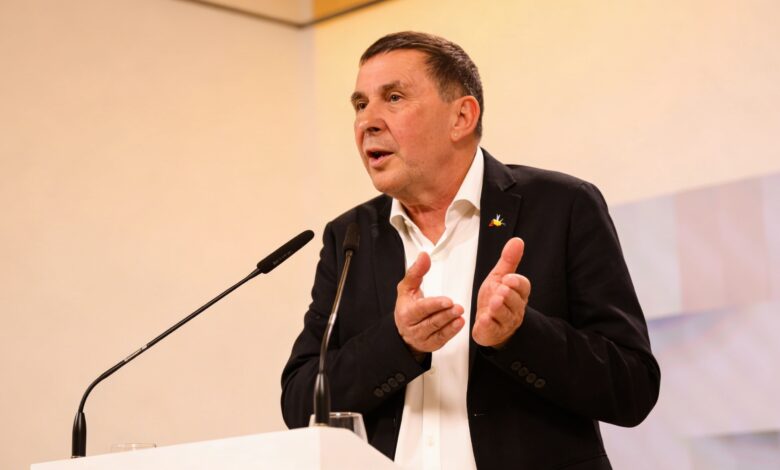
The situation surrounding threats against Arnaldo Otegi has become one of the most discussed events in the Basque Country. For Spanish society, this signals growing tension in the political landscape and highlights the need to reassess the protection measures for public figures. The security of party leaders is once again in the spotlight, and the authorities’ response could set new standards for such cases.
According to El Pais, in December 2025 EH Bildu reported receiving an anonymous death threat addressed to its general secretary. The message was sent to the EH Bildu parliamentary group’s email in the Basque Country Parliament. Earlier this week, Arnaldo Otegi was summoned to the Vitoria court to testify as a victim in the investigation of these threats. Party representatives filed an official report with the police, marking the first step in launching an investigation.
Interestingly, the incident occurred shortly after a high-profile speech by Basque PP Chairman Javier de Andrés, who, during a parliamentary session on December 18, 2025, spoke about the need for the “political elimination” of EH Bildu. His remarks sparked a heated reaction among deputies and prompted discussions around introducing a “cordon sanitaire” against the PP in parliament. Later, de Andrés acknowledged that his choice of words was unfortunate, but the consequences of his statement were significant.
EH Bildu chose not to publicize the fact that they had received threats, explaining that they wanted to act with maximum restraint and avoid creating additional hype around such incidents. Only after the information was published by El Correo did the party confirm the incident. According to russpain.com, this tactic may be aimed at preventing an escalation of tensions and avoiding new waves of threats.
Parliament’s reaction
The incident sparked widespread discussion in the Basque Parliament. EH Bildu representatives insisted on tougher security measures for deputies and public figures. Meanwhile, other parties voiced concerns about rising aggression in politics. Some deputies suggested considering additional protocols to protect the personal data and communications of parliament members.
According to El Pais, the investigation is ongoing and police are analyzing the sender’s digital trail. Authorities do not rule out that people linked to radical groups may be behind the threats, though no official theory has been announced. EH Bildu notes that such incidents undermine trust in institutions and create an atmosphere of fear among politicians.
The surge in public debate is linked not only to the threats themselves but also to the way politicians respond to such incidents. Some experts believe that public statements with aggressive rhetoric may provoke radical actions from certain individuals. In this context, attention to the language of political debates is becoming increasingly important.
Context and consequences
The incident involving Arnaldo Otegi has sparked renewed discussions about the boundaries of what is acceptable in political confrontation. In recent years, Spain has seen a rise in threats against members of various parties, reflecting a broader trend toward social polarization. According to several analysts, such events may lead to stricter legislation on the protection of public figures and tighter control over communications in parliament.
Recalling other high-profile cases, it is worth noting that the Supreme Court of Spain recently revised the sentence of Francisco Nicolás Gómez Iglesias, which also sparked widespread public debate and discussion about the role of the judiciary in defending citizens’ rights. More about the court’s decision can be found in the article on the review of the Francisco Nicolás Gómez Iglesias case.
EH Bildu emphasizes that it does not intend to change its stance on transparency and openness, despite external pressure. The party continues its work in parliament and is demanding that authorities take effective measures to ensure the safety of all participants in the political process. New discussions at the level of the government and law enforcement agencies are expected soon.
Reference information
In recent years, Spain has seen a rise in threats against politicians and public figures. In 2024, similar incidents were reported in Catalonia and Madrid, where members of different parties received anonymous threatening letters. Investigations at the time also involved cybersecurity specialists and police, but in many cases, the senders could not be identified. Such incidents raise questions about the need to revise security standards and accountability for aggressive rhetoric in the public sphere. Authorities continue to seek a balance between freedom of expression and protection from extremism, which remains a key issue for Spanish society.