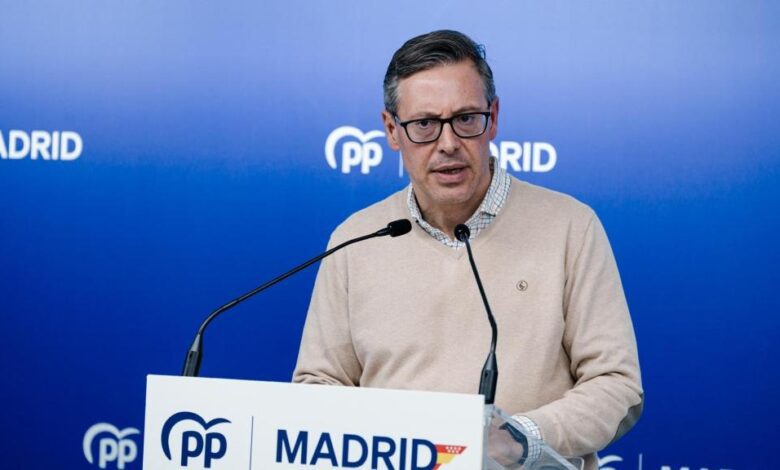
The scandal surrounding the mayor of Móstoles has once again come into the spotlight after Alfonso Serrano, secretary of the Madrid branch of the Partido Popular (PP), delivered sharp accusations against the complainant. According to him, the woman’s actions were driven by questionable motives, and the entire process is accompanied by attempts to manipulate public opinion. For local residents, this story matters not only because it could impact political stability, but also due to the risk of undermining trust in government institutions ahead of the elections.
Serrano insists on the immediate release of all audio recordings made during meetings between party representatives and the advisor involved in the case. He claims that only fragments of these recordings, possibly altered or taken out of context, have reached the public. According to the politician, such actions are intended to artificially link the name of the Madrid region president, Isabel Díaz Ayuso, to the case despite her not being involved.
Political pressure
In his speech, Serrano emphasized that publishing incomplete or edited audio files could be part of a deliberate campaign to discredit regional leadership. He noted that just days before the elections in Aragón, such scandals can sway public opinion and alter the political landscape. In his words, this is driven by personal revenge, not a pursuit of justice.
The party secretary also reported that, according to information from the applicant’s lawyer, there are even more recordings that have not yet been released. He urged against drawing conclusions based on incomplete data and called for the publication of the full audio materials to avoid distortions and manipulation.
Reaction and consequences
The situation surrounding the mayor of Móstoles and the allegations against his associates has already sparked significant resonance within Madrid’s political circles. Authorities fear that such scandals could become a tool to pressure opponents and be used for settling personal scores. At the same time, the publication of new audio recordings could lead to unexpected turns in the case and heighten tensions among various political forces.
During a press conference at the national PP office, Serrano stated that the party does not intend to comment on individual fragments of the recordings until complete and reliable information is provided. He stressed that any attempts to manipulate facts will be exposed and those responsible will be held accountable.
Context and developments
Recalling recent events, it is worth noting that such scandals involving audio recordings and accusations of manipulation are no longer unusual in Spanish politics. For instance, previously, there was widespread attention to the publication of excerpts from conversations which, according to experts, may have been altered to create a particular impression. In one such case, as reported in the report on the Villarejo case, the unexpected emergence of new recordings and the silence of key figures have led to a prolonged investigation and a rise in public distrust.
All eyes are now on how events will unfold in Móstoles and whether the parties can agree to publish all the materials. In the heat of the election campaign, any information leak or new development could prove decisive for the outcome of the vote and the region’s political future.
Similar cases
In recent years, Spain has repeatedly faced high-profile scandals involving leaked audio recordings and accusations of manipulation. Such incidents have often led to resignations, reevaluation of political alliances, and even early elections. For example, in Catalonia, after the release of controversial recordings, the opposition demanded immediate explanations and resignations, while in Madrid, a similar case triggered a large-scale investigation a few years ago. Each time, these events sparked intense public reaction and became a major talking point at all levels of government. Amid fierce political competition, such incidents gain particular urgency and can significantly shift the balance of power in the regions.