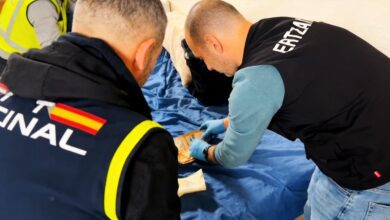
In June 2016, a scandal erupted in Barcelona that almost cost two Mossos d’Esquadra officers nearly two decades in prison. They were accused of allegedly planting drugs and weapons in the car of a port stevedore in order to arrest him. However, after years of court proceedings, the court fully acquitted them due to lack of convincing evidence.
The story began when Carlos L. went for a workout at a gym on Diagonal Avenue. While he was exercising, an unknown person placed nearly a kilogram of cocaine in his car, as well as weapons stored there—a pistol, an axe, and a knife. Shortly thereafter, the police received an anonymous call: someone identifying himself as “Alberto” reported a suspicious car parked in another part of the city. Carlos was detained immediately after leaving the gym, and he immediately claimed he had been framed.
Arrest and suspicion
From the very beginning, Carlos suspected that his longtime rival at the port—David Caballero, known as Bubito—was behind it. According to him, Bubito had accused him of spreading rumors about links to the police and drug trafficking. The feud between the two stevedores had been ongoing for years, and now Carlos found himself at the center of a criminal case to which he had no connection.
Three years later, in 2019, the investigation was closed and all charges against Carlos were dropped. But this was not the end of the story: a new phase began — the search for those who orchestrated the setup. As a result, four people ended up in the dock: two police officers and two of their alleged accomplices. They faced up to 18 years and 9 months in prison on charges of unlawful detention, planting drugs, and filing a false report.
Questionable evidence
Investigators found that police had grounds to suspect these four were involved in the drug planting case. However, the key evidence consisted of recorded conversations obtained through wiretapping in an office and a car. The court ruled these recordings inadmissible, since the authorization for them had been issued without sufficient cause and was more preventive in nature than based on actual evidence.
Without these recordings, the prosecution was left only with the testimonies of the defendants and witnesses. But this caused new problems: two key witnesses suddenly claimed in court that they could not remember anything, and one even recanted his earlier statements, saying he had not been pressured by the police.
Investigation collapses
The court noted that although Carlos’s testimony expressed his suspicions, it did not provide direct evidence of the defendants’ involvement in planting the drugs. He did not witness the moment the drugs were planted and could not identify any of the accused. Additionally, the judges pointed out that the identities of the anonymous informants relied upon by the investigation were never disclosed throughout the trial. According to the court, this prevented the defense from fully protecting their clients’ interests.
As a result, the court concluded that none of the evidence presented was enough to clearly establish the defendants’ guilt. All charges were dropped and the case was closed.
If you didn’t know, Mossos d’Esquadra is the regional police force of Catalonia, founded back in the 18th century. Today, they are responsible for security in Barcelona and other cities of the autonomous region, as well as investigating complex criminal cases. In recent years, Mossos officers have faced accusations of abuse of power, but most of these cases have ended in acquittals due to lack of evidence or procedural violations.