In Spain, issues capable of reshaping the healthcare and political landscape are once again in the spotlight. The decisions being made now affect not only professionals but the entire population. Against the backdrop of an ongoing doctors’ strike and growing pressure on the healthcare system, the Ministry of Health and the autonomous communities convened an extraordinary online meeting to review the updated euthanasia guidelines. This move could speed up procedures and resolve discrepancies between regions, which is especially important for patients and their families.
For the second consecutive year, the euthanasia debate has been marked by heated arguments among representatives of different regions. According to Health Minister Mónica García, the revised guidance aims to make the process clearer and more transparent, while strengthening administrative support and the role of nurses. Previously, similar initiatives often encountered bureaucratic obstacles, leading to delays and ambiguous interpretations of the law. Authorities are now working to establish a unified approach to prevent past mistakes from recurring.
Political shifts
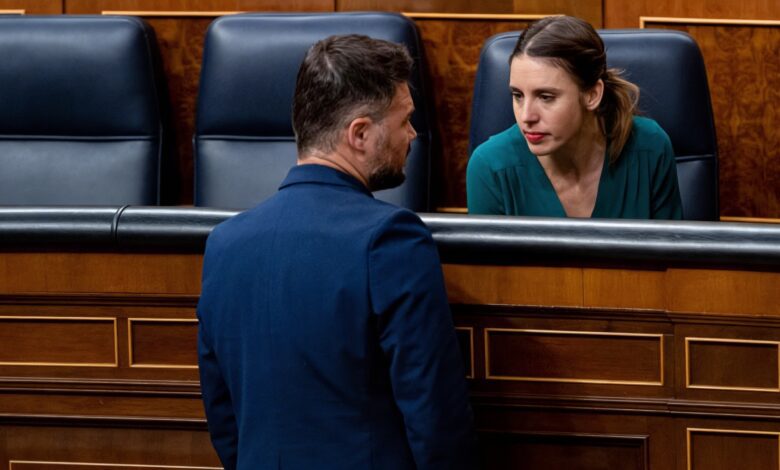
Alongside healthcare reforms, a meeting is being held in Barcelona that could shape the future of the left-wing movement in Spain. This evening, key figures will gather in the Ciutadella campus auditorium at Pompeu Fabra University: Gabriel Rufián, representing ERC in Congress, and former minister and current MEP from Podemos, Irene Montero. They will be joined by the secretary general of Podemos, Ione Belarra. The main topic is the possibility of forming a ‘plurinational’ left-wing coalition ahead of the next elections.
The idea of uniting various parties—ranging from ERC and BNG to Bildu, MÉS, Compromís, Sumar, and Podemos—has been under discussion for several months. According to its proponents, such an alliance could serve as an alternative to a potential government formed by PP and Vox and help preserve left-wing influence in parliament. Whether this project can realistically be implemented remains an open question, but the very fact that it is being discussed publicly signals a growing demand for change among voters.
Debates and challenges
The meeting in Barcelona takes place amid lively debates about the future of the country’s political landscape. Many observers note that left-wing parties face the need to rethink their strategies and find new forms of cooperation. As traditional alliances lose popularity and voters become increasingly demanding, finding compromises and new partnership models is becoming a major challenge for party leaders.
Special attention is given to how different regions perceive the concept of “plurinationality.” For Catalonia, the Basque Country, and Galicia, this issue holds particular significance, as it involves not only political representation but also the recognition of cultural and linguistic identities. At the same time, in other parts of the country, such initiatives raise concerns about a possible weakening of Spain’s unity.
Context and consequences
The discussion of new euthanasia regulations and the potential formation of a left-wing coalition is taking place amid growing political tensions overall. As russpain.com notes, recent government decisions have already sparked internal disputes and affected the economic situation. In a previously published letter, Pedro Sánchez explained Spain’s firm stance on international issues, which has also become a topic of debate among politicians and experts (more details on the response to Sánchez’s position).
In recent years, Spain has repeatedly faced the need to reconsider its approaches to healthcare and political structure. For example, in 2024, changes to the distribution of medical resources among regions were debated, and in 2025, extensive discussions took place on the role of autonomous communities in shaping national policy. These developments highlight that striking a balance between central and regional interests remains a key issue for the country. Topics like euthanasia and political alliances have become part of this complex process, reflecting society’s demand for fairer and more transparent solutions.