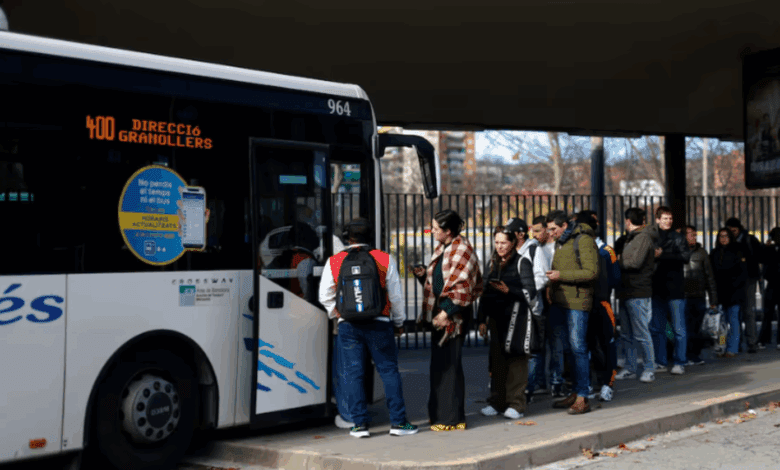
In 2024, Barcelona faced an unprecedented surge in intercity bus passengers. The main reason was a prolonged rail service crisis that forced thousands of residents and visitors to switch to buses. This led to overloaded central streets and an urgent need to find new solutions for managing transportation flows. As reported by El Pais, the authorities in Catalonia and Barcelona are considering building new underground bus terminals to reduce congestion on city streets and improve convenience for passengers.
Challenges and plans
According to official data, in 2024 the number of intercity bus trips in Catalonia exceeded 82 million, with about 54 million within the metropolitan area alone. This increase is linked to frequent disruptions in Rodalies service, which prompted a mass shift to buses. City and regional authorities have already identified key locations for future bus stations: Espanya square, Diagonal, Gran Via, and Sagrera. The preference is for underground options, so buses don’t disrupt surface traffic.
Antoni Balmón, Vice President of the Barcelona Metropolitan Area, warned back in December that modernizing the railway network could take decades. In his view, the only way to prevent a transport collapse is to increase the number of buses. After the accident in Gelida in January, the situation worsened: hundreds of buses were brought in to transport passengers left without trains. Buses arrived urgently from other regions of Spain, and drivers were even hired from South America due to staff shortages.
New transport hubs
Barcelona authorities emphasize that bus transport has already surpassed rail in the number of daily trips: 380,000 compared to 260,000. A shift in residents’ habits is evident—many now choose buses to be sure they arrive on time. Plans include creating new transport hubs at Fabra i Puig and Plaça Espanya to better integrate bus routes with the metro and suburban trains.
Catalonia’s Department of Territorial Development is analyzing key transport corridors and considering expanding dedicated bus lanes and adding new routes on the southern Gran Via entrance. Special attention is given to preserving Nord Station and opening the new station at Sagrera as soon as possible, which will connect to the future railway terminal. There’s also discussion of an underground station at Plaça Espanya, which could become the city’s largest interchange hub.
Challenges and uncertainties
So far, none of the new stations have a definitive completion date. However, there are discussions about opening a station at Plaça Espanya to mark the centenary of the 1929 World’s Fair. This project would replace the current transfer point at Sants station. Additionally, there are plans for another underground station on Diagonal, possibly closer to Plaça Francesc Macià, to provide convenient transfers to the metro, bus, and tram networks.
Fabra i Puig station will retain its current function, but there are talks about its possible deepening. The question of adding another station at the entrance along Gran Via remains unresolved. Authorities emphasize that developing the bus infrastructure is key to reducing chaotic stops on city streets and improving overall transport conditions.
Context and trends
In recent years, Barcelona has been actively investing in its transport infrastructure. For example, significant funds were recently allocated for the modernization of El Prat Airport, reflecting both the increase in passenger numbers and the need to upgrade major transport hubs. More details on the large-scale airport works can be found in the article on record investments in the renovation of El Prat’s runways.
A surge of interest in bus transportation is being seen not only in Barcelona, but also in other major Spanish cities. In Madrid and Valencia, new bus station projects and the expansion of dedicated public transport lanes are also under discussion. Such measures help reduce the strain on rail networks and increase mobility for the population. In the coming years, further development of transport hubs and integration of different modes of transport are expected to make travel more convenient for both residents and visitors.