A new project is launching in Barcelona that could transform the daily lives of tens of thousands of residents. City authorities have announced the start of construction on a new neighborhood directly above the future Sagrera station. This initiative will not only provide housing for 25,000 people, but will also address the long-standing issue of neighborhoods divided by railway tracks. Amid a severe shortage of affordable housing and overloaded infrastructure, these changes are seen as a much-anticipated step forward.
According to El Pais, Mayor Jaume Collboni has prioritized the comprehensive redevelopment of the area now occupied by railway lines. Although Sagrera station itself won’t be fully completed until 2032, the city does not plan to wait for all the work to finish. Construction and landscaping will begin in the coming years, so that by the time the transport hub opens, a modern residential district and Barcelona’s largest park—spanning 36 hectares—will already be in place.
Housing and infrastructure
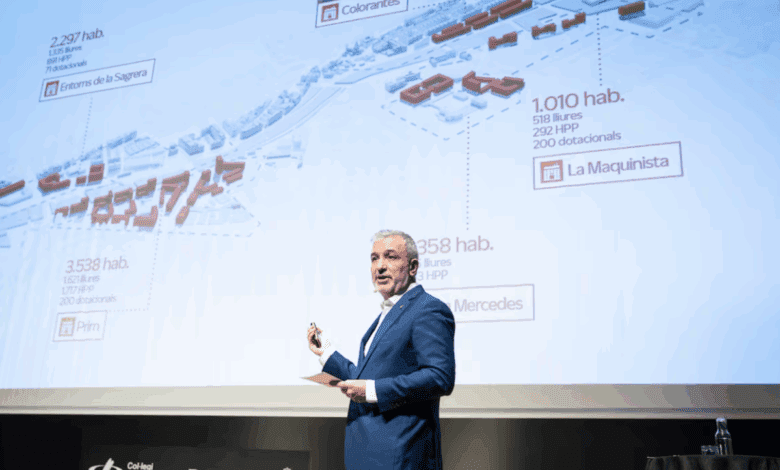
The project plans for the construction of more than 11,000 apartments, with nearly half designated as protected or social housing. This is a crucial step in a city where rental and property prices continue to rise. In addition to residential buildings, the area will feature new schools, medical centers, cultural institutions, and sports facilities. More than 200,000 square meters have been allocated for public amenities.
The economic impact is also impressive: over 480,000 square meters are allocated for commercial and business projects. This will create new jobs and give a boost to the development of small and medium-sized enterprises. Investments in the project will amount to 260 million euros by 2031, enabling not only the construction of new buildings but also the modernization of existing infrastructure.
Transport and district connectivity
The Sagrera station will become a major transportation hub, bringing together metro lines, Rodalies commuter trains, and AVE high-speed routes. This will help redistribute passenger flows and ease congestion in other parts of the city. Authorities expect that the new station and its surrounding area will become a magnet for residents from different parts of Barcelona, as well as for visitors to the city.
Special emphasis is placed on eliminating the physical barrier that for years has separated the Sant Andreu and Sant Martí districts. The construction of a park and new roads will allow residents to move freely between these parts of the city. This approach has already proven effective in other European metropolises, where integrating transport and residential areas has led to a higher quality of life.
Political support and challenges
To implement such a large-scale project, support is needed not only from the municipality but also from regional authorities. Mayor Colboni has called on politicians to approve the Catalonia budget, without which it will be impossible to complete the infrastructure and ensure the operation of new social facilities. Amid political instability and disagreements between parties, this issue remains unresolved.
However, such challenges are nothing new for Spanish cities. Recently, a conflict erupted in Móstoles between the mayor and a former official, sparking debate about management effectiveness and party support. More about this situation can be found in the article on the internal conflict in Móstoles.
Context and similar projects
In recent years, Spain has seen a growing number of projects transforming former industrial and transport zones into modern residential districts. In Madrid, the redevelopment of the Chamartín district has been completed, with new homes, offices, and parks replacing the old railway tracks. In Valencia, the area around the former port is rapidly developing, with contemporary housing complexes and public spaces under construction. These initiatives address housing needs and create new urban centers, making cities more convenient and attractive for residents and visitors alike.