Catalonia is on the brink of a major political conflict that could affect the lives of millions in the region. The question of budget approval has taken center stage, as it determines funding for healthcare, education, and infrastructure. Negotiations between the Socialists and the Republicans have reached an impasse, and the window for compromise is closing rapidly.
Negotiations and Demands
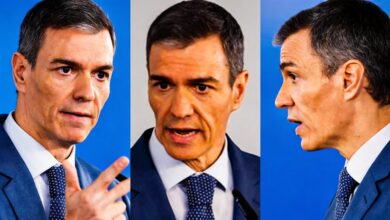
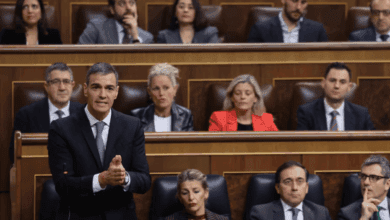
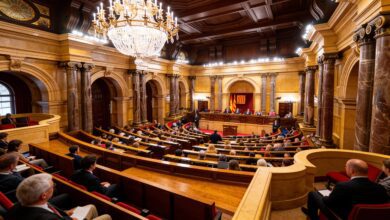
Catalan President Salvador Illa (Salvador Illa) took to the parliament to ease tensions, urging Esquerra Republicana de Catalunya (ERC) to join the negotiating table. However, ERC representatives insist they will not back the budget unless control over personal income tax (IRPF) collection is transferred. The government currently lacks a majority to pass the bill on its own and is forced to seek support from other parties.
On Friday, the government plans to approve the budget draft, which will then go to parliament for review. Debates on the issue are set for March, leaving both sides just two weeks to reach an agreement. Illa stresses his readiness for dialogue and notes that over 70% of the agreements made during the formation of the government have already been implemented. He also pledges to meet tax commitments if a deal is reached.
Opposition Response
For now, the Socialists can only count on their 42 votes and the support of six deputies from Comuns. ERC leader Josep Maria Jové stated that his party would not enter negotiations without guarantees on tax issues. He recalled that the demand for the transfer of the IRPF is included in the government formation agreement and backed by the PSOE federal committee. According to him, this is not a political whim, but a necessity to expand Catalonia’s fiscal autonomy.
For the first time in the current legislature, Jové exercised his right to an additional statement to emphasize that ERC is ready to discuss the budget, but only after the conditions are met. His unexpected move even surprised the president of parliament, Josep Rull. ERC representative Ester Capella added that Illa’s upcoming speech will shed light on the future of the region and the government.
Pressure and criticism
Junts per Catalunya has yet to decide on its position, but has already sharply criticized Illa. Junts leader Mónica Sales accused the government of incompetence and dependence on other parties. She pointed to numerous crises—from transport problems to teacher and farmer protests. In response, Illa noted that many of these difficulties had accumulated over years, rather than arising suddenly.
In addition to ERC, Vox and Partido Popular (PP) have also spoken out against the budget. PP representative Alejandro Fernández believes that the new law banning speculative housing sales infringes on property owners’ rights. At the same time, CUP spokesman Xavier Pellicer is convinced that this measure will not stop the activities of major investment funds. Illa defends the initiative, emphasizing that he does not intend to remain indifferent to the region’s problems.
Context and consequences
The situation in Catalonia mirrors recent events in other parts of Spain, where the government was forced to take emergency steps to stabilize the situation. For example, the decision to fully mobilize resources to aid Andalusia demonstrated how swiftly political disagreements can affect the fate of entire regions. According to El Pais, what’s at stake in Catalonia now is not only the budget, but also public trust in the authorities and the region’s ability to manage internal crises.
In recent years, disputes over the allocation of tax revenues and powers between the central government and the autonomous communities have become increasingly heated. In 2024, similar debates broke out in the Basque Country and Valencia, where regional authorities also demanded greater financial autonomy. A last-minute compromise was reached at that time, but the consequences for political stability are still being felt. The Catalan experience could serve as another example of how the struggle for resources and autonomy shapes the future of Spain’s regions.