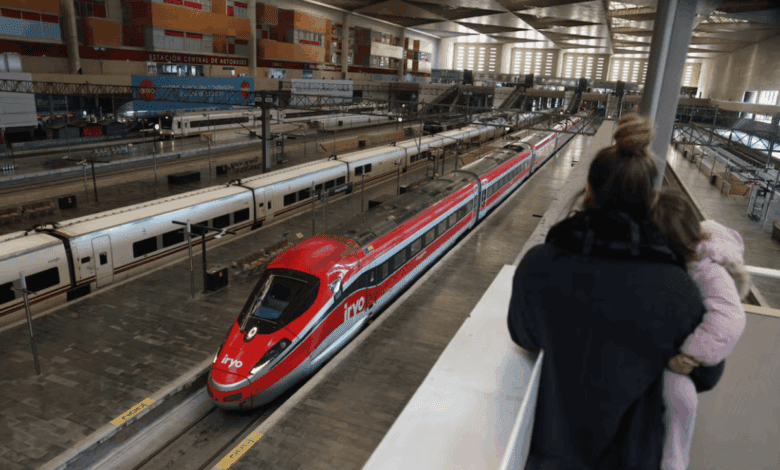
The situation on Catalonia’s railways has a direct impact on the region’s business activity. Delays and disruptions in train services have become commonplace, forcing entrepreneurs to seek alternative ways to travel between the country’s key cities. In an environment where stable transport connections are critical for companies’ operations, any new solution gains particular significance.
In recent months, high-speed train passengers traveling between Barcelona and Madrid have faced constant delays. The usual travel speed is now unattainable on many sections, and criticism of Renfe persists. The railway company attributes the issues to the state of the infrastructure and shifts the responsibility to Adif, but for businesses, this changes little—the reliability of transportation remains in question.
A business alternative
Amid these challenges, the Catalan small and medium business association Pimec has reached an agreement with Italian carrier Iryo. Now entrepreneurs, small companies, and the self-employed can take advantage of special terms and discounts on high-speed trips between Spain’s two largest cities. This move aims to reduce dependence on Renfe and provide a more predictable service for business travel.
According to El Pais, the agreement was officially formalized at a meeting between the leaders of Pimec and Iryo. Business representatives emphasize that quality transport links are a key factor for the growth and competitiveness of companies. The new terms are expected to help entrepreneurs plan business trips more efficiently and avoid disruptions, which have become frequent on the Barcelona–Madrid route.
Impact on the transport market
The corridor between Barcelona and Madrid remains the busiest high-speed rail route in Spain. More than 14 million passengers use it annually, several times more than other routes. As Renfe struggles to cope with demand, the emergence of alternative options is becoming increasingly important.
Meanwhile, the airline Iberia has lifted the cap on economy-class ticket prices for flights between Madrid and Barcelona. This fixed price had previously been introduced after some trains were canceled and speed restrictions were imposed due to rail works. Now, with the rail situation still unstable, airlines are also adjusting their policies, influencing passengers’ choices.
Reactions and consequences
For many companies and self-employed professionals, the new conditions offered by Iryo could become a decisive factor when choosing a means of transportation. Lower costs and increased reliability of travel are important arguments in favor of switching to an alternative carrier. According to business representatives, such measures not only help save money but also strengthen a company’s position in the market.
Problems on the railway are not limited to high-speed routes. Previous large-scale strikes by train drivers have already led to mass train cancellations and major disruptions across the country. This was covered in detail in the article about how the railway strike paralyzed transportation throughout Spain, providing additional motivation to seek new solutions.
In the near future, competition between carriers is expected to intensify, offering passengers more options. For Catalan businesses, this presents an opportunity to reduce risks associated with transport disruptions and improve operational efficiency.
In recent years, Spain has faced regular disruptions in railway operations. Strikes, technical failures, and infrastructure works have repeatedly led to widespread delays and cancellations. These issues are particularly acute on popular routes, where alternative options become a lifeline for businesses and individuals. The emergence of new players in the high-speed transport market and the flexible pricing policies of airlines are reshaping the rules of the game, forcing traditional operators to rethink their approach to service and reliability.