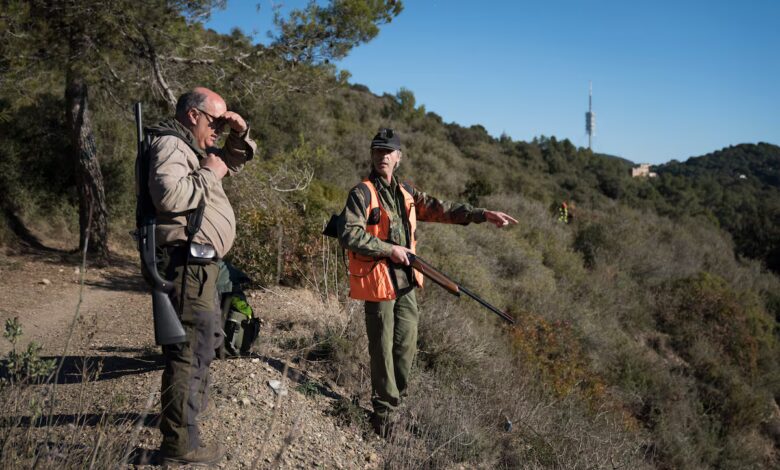
In Catalonia, the importance of hunting for society is once again under debate. The renewed outbreak of African swine fever has prompted authorities to turn to hunters for help. In a region where opinions on hunting have always been divided, representatives of the community insist that their work is not just a hobby, but a vital measure to protect agriculture and animal health.
Joaquín Zarzoso, head of the Catalan Hunters’ Federation, points out that their efforts are often underestimated. According to him, hunters are forced to take responsibility when disease outbreaks threaten crops and livestock. At the same time, Zarzoso claims that public opinion and pressure from animal rights advocates only make the situation more difficult.
Public pressure
In recent years, hunters have faced increasing criticism. Activists and environmentalists accuse them of excessive cruelty and believe that the wild animal population problem is exaggerated. Some organizations, such as Ecologistas en Acción, oppose the mass culling of wild boar, calling it an unjustified measure. They argue that the focus is on the wrong causes, and that mass slaughter of animals will not solve the problem.
Hunters themselves report constant attacks and even vandalism: warning signs are ignored in hunting grounds, and hunters’ vehicles are often targeted by vandals. Despite this, they continue to do their job, especially when it comes to saving crops or preventing the spread of dangerous diseases among animals.
Political disagreements
The outbreak of African swine fever has sparked political disputes. Opposition representatives accuse regional authorities of inaction and insufficient control over the situation. According to some politicians, abandoning active hunting and reducing police presence in rural areas has only made the problem worse.
In response to criticism, the Catalan government acknowledged that the wild boar population does in fact exceed acceptable levels. Authorities have called for stronger population control measures, including increasing the number of hunting raids. Hunters welcomed this long-awaited recognition of their importance but insist on the need for additional support—both financial and organizational.
Economic challenges
Hunting in Catalonia stopped being just a pastime long ago. According to industry representatives, the costs of gear, veterinary services, and transportation fall on the hunters themselves. Although government subsidies increased this year, they do not cover all expenses, especially under epidemic conditions.
In April, the authorities allocated additional funds to support hunters and promote the processing of wild game meat. For each animal harvested for sale, hunters receive a small compensation. However, as the Federation notes, the current situation demands much greater effort and investment than before.
Challenges facing the sector
These difficulties are further compounded by internal problems: bureaucracy, a shortage of young professionals, and outdated regulations hinder the development of the hunting sector. The outbreak of the epidemic has only exacerbated these issues, putting hunters in the spotlight. Now, they are forced to work in a climate of uncertainty, unsure how long the crisis will last or what further measures may be required.
The hunting season coincided with the epidemic, resulting in new restrictions. Bans on certain types of hunting, introduced to prevent the spread of disease, threaten significant losses for the entire sector. Hunters fear that without support from the government and society, it will be difficult to fulfill the tasks placed upon them.
If you weren’t aware, the Catalan Hunting Federation (Federació Catalana de Caça) unites thousands of hunters across the region and works to protect their interests. The organization actively cooperates with the authorities and is involved in the development of new regulations and support programs. In recent years, the Federation has become one of the main voices in discussions about ecology, biodiversity, and managing wild animal populations in Catalonia.