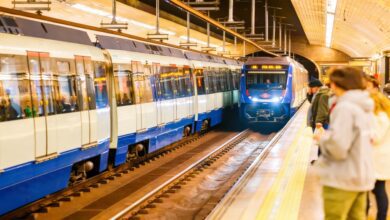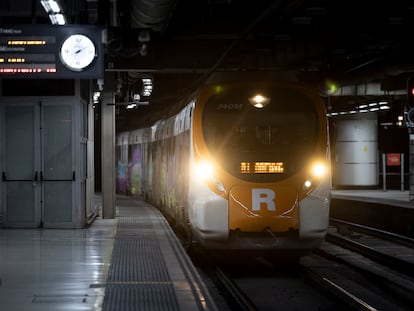
Catalonia residents once again found themselves caught in a transport collapse: the morning began with widespread disruptions in commuter train services. For thousands of Rodalies passengers, this not only means being late for work and school, but also forced transfers to buses and a complete lack of clarity in the timetable. Speed restrictions imposed on dozens of sections and infrastructure failures have paralyzed key routes of the railway network.
Disruptions on all routes
Since early morning, the R1 line faced problems between Clot and Badalona stations, leading to a halt in traffic and the need to transfer to buses between Blanes and Maçanet-Massanes. Despite the prompt response from repair crews, trains are still operating only on a limited section between L’Hospitalet and Blanes. On the R2 South line, passengers faced delays of more than 20 minutes, and trains are forced to stop at all stations, further increasing travel time. Similar disruptions are seen on R2 North, where intervals between trains have become unpredictable.
Service on the R3 line is completely suspended, and on R4, where a recent tragedy with fatalities occurred, operations have only partially resumed. Passengers are having to switch to buses between Sant Sadurní d’Anoia and Martorell Central, while on the section to Terrassa Estació de Nord, trains are delayed by at least 15 minutes. The onward journey to Manresa is also only possible by bus.
Restrictions and repair works
The cause of such widespread disruptions was not only accidents but also strict speed restrictions imposed on 155 sections of the railway network. These areas had previously experienced incidents or revealed safety issues, forcing the operator to reduce train speeds on over 100 kilometers of track. Although this measure aims to prevent further accidents, it has effectively paralyzed the usual rhythm of life for tens of thousands of residents in the region.
The situation on the R8 line remains critical: service is at a complete standstill due to problems in the Rubí tunnel, blocking not only passenger trains but also freight traffic. On the R11 between Barcelona Sants and Figueres, delays are over half an hour, while the section from Figueres to Portbou is being serviced exclusively by buses. Southern regional routes have not escaped the transport chaos either: between Sant Vicenç de Calders and La Plana Picamoixons Vinaixa, as well as between Reus and La Plana Picamoixons Vinaixa, passengers are forced to switch to buses, with delays reaching 30 minutes or more.
Passengers waiting for change
Conditions are no better for residents of Girona and other northern regions: trains are delayed, and some routes are being served only by buses. As a result, thousands of people lose hours on the road every day, facing overcrowded platforms and a lack of information about arrival times. Many passengers note that such disruptions have become routine, and hopes for a quick return to a stable schedule are fading by the day.
As the Minister of Transport openly acknowledges poor service quality and infrastructure issues continue to mount, residents of Catalonia are forced to look for alternative means of transportation. However, for most people, the train remains the only available option, despite all the difficulties and uncertainty.