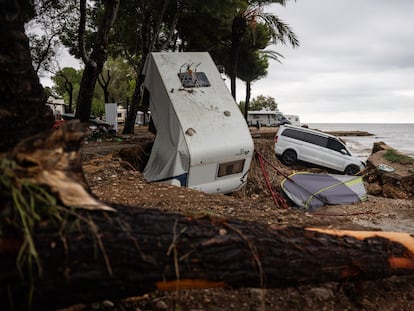
Catalonia’s coastline is on the brink of major changes: regional authorities have announced a large-scale reform that will affect millions of residents and tourists. The reason is mounting climate threats that could alter the familiar landscape of coastal areas and impact the economy, infrastructure, and way of life. Decisions made in the coming years will determine what Catalonia’s coast will look like by the end of the century.
New challenges
The plan, launched by the Catalan government, will cover 692 kilometers of coastline—home to nearly half the region’s population. Every summer, millions of tourists flock here, and the coastal area hosts up to 75% of all tourist infrastructure. Yet, this is precisely where the effects of climate change are felt most acutely: beach erosion, infrastructure damage, and threats to both housing and businesses.
Authorities admit: there are no universal solutions. Each stretch of coastline will require a tailored approach. In some areas, concrete structures will need to be dismantled, as is already happening in Calafell. In others, dunes and natural ecosystems must be restored to protect beaches from storms. Ports and promenades in certain locations will have to be adapted to new weather conditions, and in some districts, even the demolition of buildings found to be at risk will be necessary.
Action plan
In the coming years, a comprehensive plan will be developed and implemented, bringing together the efforts of regional and municipal authorities, businesses, and public organizations. The process will begin with a broad discussion and debate on the objectives, and by 2027, the first draft of the document is expected to be prepared. Final approval is anticipated in 2028.
As part of the reform, the coastline will be divided into smaller sections, each with tailored protection and restoration measures. Tools will include the creation of adaptation routes, guidelines for the use of coastal areas, the development of green infrastructure, and updates to the beach catalog and access schemes to the sea. Special attention will be given to reducing car traffic and expanding public transport along the coast.
Five scenarios for the future
Authorities are considering several possible scenarios. One involves active intervention in natural processes using artificial solutions, including the demolition of buildings if necessary. Another proposes restoring the coastline to a more natural state and rehabilitating natural landscapes. A third option is to free up territories for nature to regenerate independently. There is also discussion of creating a ‘resilient’ coastline that balances the interests of society and nature, as well as a scenario where all coastal activities become as environmentally friendly and restorative as possible.
The main goals are to reduce risks for coastal areas, restore ecosystems, balance economic activity with nature conservation, and improve quality of management. To achieve this, 12 special instruments will be developed and made available to all interested parties.
Context and experience
In recent years, similar reforms have been launched in other regions of Spain and Europe. For example, projects to restore dunes and reevaluate coastal development are already underway on the coasts of Valencia and Andalusia. In some cases, authorities have had to relocate residents from houses threatened by erosion and flooding. In others, they have introduced new standards for tourist infrastructure to minimize damage from extreme weather events. These measures are often controversial, but they are becoming essential for preserving unique coastal landscapes and protecting the region’s economy.