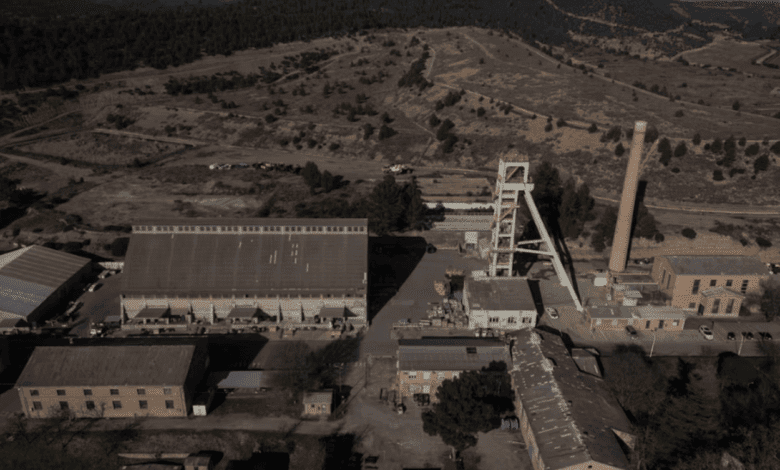
Catalonia is once again facing the loss of a major industrial project. The plan to build a battery component factory on the site of the former Vilafruns mine near Sallent has been officially canceled. The €285 million investment, which was expected to revitalize the region, will not go ahead. The reason was an unexpected chain of events that began with a decision by U.S. President Donald Trump, which affected the financing of a similar facility in Missouri.
Earlier this year, ICL, which owns the mine through its subsidiary Iberpotash, announced a partnership with Shenzhen Dynanonic of China. Together, they planned to build a factory producing lithium iron phosphate cathodes—a key component for electric vehicle batteries. The project was granted strategic status by the Catalan government to expedite all bureaucratic procedures. There were expectations that the Vilafruns mine, closed in 2020, would resume operation, giving a strong boost to the regional economy.
However, by June it became clear that the plans had fallen through. The companies officially confirmed the termination of the agreement and the withdrawal of investment. ICL is now working with authorities to find new uses for the site, but so far, without concrete results.
Reasons for the cancellation
A key factor was US policy towards green energy. The central element of ICL’s global strategy was the construction of a plant in St. Louis, Missouri. This facility was expected to produce battery components, with the European project in Catalonia serving as part of this supply chain. However, the Trump administration, sticking to its support for the traditional automotive industry, blocked federal funding for the American plant.
Without US support and faced with difficulties securing a grant from the European Innovation Fund (ICL was counting on 140 million euros), the Chinese partner Dynanonic withdrew from the project. This automatically put an end to plans for the factory in Vilafruns. The company announced it would continue to supply raw materials for battery production, but would no longer be involved in further processing or manufacturing of components.
Economic consequences
For Catalonia, the cancellation of the project was a major blow. The region has long been trying to attract investment in the electric vehicle and battery sector to diversify its economy and create new jobs. The closure of the Vilafruns mine in 2020 was already a painful event for local residents, and now hopes for an industrial revival have once again been dashed.
The area of the former mine—100,000 square meters—remains unused. All potash and salt extraction has been transferred to a neighboring facility in Súria, also operated by Iberpotash. So far, no new investors have been found for the site.
Industry context
The situation with Vilafruns is not an isolated case. In April, the major chemical company Basf also abandoned its battery recycling plant project in Tarragona, where it had planned to invest 500 million euros. The reasons are similar: uncertainty over financing and shifting regulations in the European market.
At the same time, in Montroig del Camp, the Korean company Lotte is moving forward with its battery anode production project, investing 400 million euros. However, the general trend shows that it is increasingly difficult for Catalonia to secure major projects related to transportation electrification.
The region’s future
Against the backdrop of canceled investments and delays in launching new production facilities, concern is growing in the region. The European Commission recently postponed the ban on internal combustion engine vehicles, further decreasing investors’ interest in building battery factories in Spain. As a result, Catalonia risks being left out of the global shift toward electric vehicles.
For now, the fate of the Vilafruns site remains uncertain. ICL and local authorities continue to seek alternative projects, but no concrete solutions have been found so far. Local residents and experts fear that without new investments, the region could lose its chance for economic revitalization.