The decision to expand the Parliament building in Catalonia has become one of the most talked-about events for residents of Barcelona and the entire autonomous region. The historic building, long overcrowded, has hindered the work of deputies and staff and limited the hosting of public events. Now, after years of negotiations, authorities have found a way to increase space for the legislative body, which could impact the organization of the urban environment and access to government services.
As El Pais reports, the agreement between the Barcelona City Council, the Catalan government, and the Parliament itself provides for the construction of a new wing on the site of the former City Guard stables. This will add about 13,000 square meters to the existing premises. The new building will be located just 300 meters from the current assembly hall, ensuring convenient access between the facilities. However, the project will take at least ten years to complete, and the relocation of the stables to Montjuïc has already been planned.
Historical restrictions
For a long time, any attempts to expand the parliament faced restrictions on the use of the Ciutadella Park and the Barcelona Zoo territory. Back in 2006, relocating the zoo and developing its land was discussed, but the 2008 economic crisis put an end to those plans. In recent years, other options have been considered: using land owned by the Department of Justice or buildings at the Universitat Pompeu Fabra campus. There was even talk of housing the parliament’s offices in the military institute building or the chapel, but difficulties negotiating with the military made this option unfeasible.
Ultimately, the choice fell on the former stables, once part of the machinery gallery for the 1888 World’s Fair. Today, only the façade and part of the interiors of the historic building remain. According to plans, about 10,000 square meters of the new building will be above ground, with another 3,000 below ground. The underground area will likely have parking for deputies, freeing up the area around the parliament building from cars.
Urban changes
The agreement covers not only the construction of a new building, but also changes to the organization of the area around the parliament. Barcelona City Hall plans to stop using the former parade ground as a parking lot for deputies and visitors. There are also plans to open a passage between Wellington Street and Picasso Avenue, which is currently blocked by the zoo wall. In the future, a new pedestrian link will connect to the Vila Olímpica district.
The increase in parliamentary staff, a rise in the number of factions and advisors, along with the active hosting of events for citizens, have made expanding the building inevitable. According to El Pais, up to 800 people are present on plenary days, and last year the parliament welcomed 70,000 visitors. Only two thirds of the current space can be used by deputies and administration, leading to a constant shortage of room.
A long road to a solution
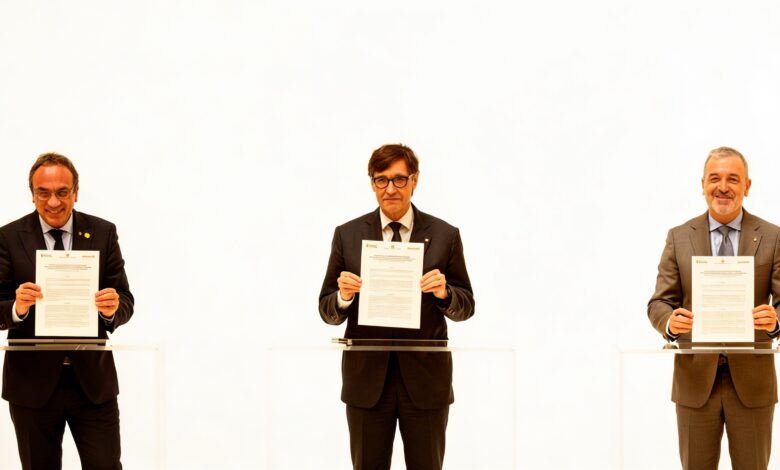
Since the parliament was restored in 1980, the building has undergone several renovations, but by 2026 it was clear that there was no room for further changes within the historic structure. The last major overhaul took place in 2004, but since then the staff has doubled, and requirements for security and transparency have only increased. The new agreement is the result of a series of meetings between Parliamentary President Josep Rull and Mayor Jaume Collboni, who agreed to speed up the process and choose the most realistic option.
Under the signed protocol, the parliament and the city hall will jointly launch an open competition for an architectural design. City authorities will take part in evaluating proposals to preserve the historical character of the park and ensure the new building fits harmoniously into the urban environment. According to El Pais, this step was made possible by a compromise among all parties and by taking into account the interests of Barcelona residents.
Context and similar cases
In recent years, issues of expanding and modernizing government buildings in Spain have often sparked public debate. For example, the government’s recent decisions on cabinet reshuffles and the adoption of high-profile measures, as was the case when the ministerial team was renewed,, also involved discussions about the need for new facilities and infrastructure. In Madrid and other major cities, the lack of space for government institutions is a recurring topic, reflecting a general trend of a growing workforce and increasingly complex administrative processes. Such projects require lengthy approvals and frequently become the subject of public debate, particularly when they affect historic areas or popular city parks.