A major exhibition dedicated to Mercè Rodoreda, the most renowned Catalan writer of the 20th century, has opened at the CCCB Cultural Center in Barcelona. The organizers invite visitors to explore her work free from the usual labels and prejudices that have surrounded her for decades. Titled “Rodoreda, un bosc” (“Rodoreda, a Forest”), the exhibition aims to showcase the depth and modern relevance of her writing, while dispelling stereotypes of ‘sentimentality’ and ‘naivety’ often associated with her work.
Visitors are offered more than just an exhibition—it’s an immersive journey into the writer’s inner world. Instead of a traditional biographical timeline, the curators invite people to dive into the texts and imagery that shaped her unique style. The exhibition is divided into six thematic zones, each revealing a key motif in Rodoreda’s work: from innocence and desire to war, the houses of Barcelona, metamorphosis, and the soul.
A contemporary perspective
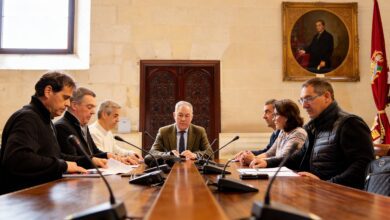
The exhibition’s curator, Neus Penalba, emphasizes that Rodoreda was both innocent and ruthless, childlike and dark, realistic and fantastical. This approach helps readers see not only the beauty of her language but also the profound and sometimes unsettling symbolism in her books. CCCB director Judit Carrera notes that this is one of the most anticipated exhibitions of the year, and that months of preparation brought together dozens of specialists.
The exhibition features around 400 works of art engaged in dialogue with Rodoreda’s texts. These include pieces by Suzanne Valadon, Fina Miralles, Ramon Casas, Marc Chagall, Remedios Varo, Leonora Carrington, Picasso, Dora Maar, Man Ray, Laia Abril, Alice Rohrwacher, and other renowned artists.
Dialogue with Art
A highlight of the show is Fina Miralles’ work “Mujer-Árbol” (Woman-Tree, 1973), which visually echoes a passage from Rodoreda’s novel “Quanta, quanta guerra”. In this scene, the protagonist quite literally takes root in the earth, turning into a tree—a motif that seamlessly fits within the exhibition’s concept, where the forest serves as a metaphor for the writer’s creative process.
The exhibition also features the original poster for the film “La plaça del diamant” (The Diamond Square, 1982), starring Sílvia Munt and directed by Francesc Betriu. The show is not limited to historical works: five new pieces have been commissioned from contemporary Catalan artists, offering fresh interpretations of Rodoreda’s themes.
Challenging Stereotypes
Neus Penalba openly criticizes the academic tradition that has long regarded Rodoreda with a degree of condescension. She emphasizes that the writer never engaged in autobiography in her books, and her works are full of complex allusions and unexpected meanings. The forest in the exhibition’s title is not merely a natural motif but a symbol of the intricate, multilayered structure of her works, where beneath the surface beauty often lies danger and darkness.
Special attention is paid to the darkest aspects of Rodoreda’s work. For example, the novel ‘Death and Spring’ (La mort i la primavera), recently republished and thoroughly studied by Penalba, is filled with unsettling and even frightening imagery. However, as the curators note, these themes could already be found in the writer’s early works, such as ‘Aloma’ (Aloma) and in the stories ‘My Christina’ (La meva Cristina).
New Interpretations
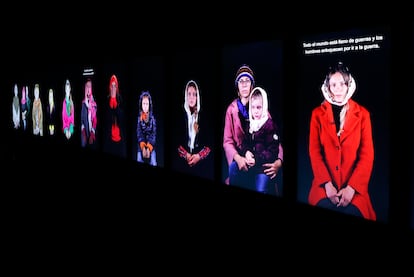
Among the new works created especially for the exhibition are a large-scale wall drawing by Oriol Vilapuig, sculptures by Mar Arza, a darkroom installation by Èlia Llach, a sound corridor by Cabosanroque conveying the atmosphere of war and exile, as well as a theater project by Carlota Subirós, which recalls the actresses who played Natàlia—the protagonist of ‘The Time of the Doves.’
The organizers emphasize: the exhibition is not only a tribute to the great writer, but also an attempt to show how her work continues to inspire contemporary artists and readers. The forest, as a symbol, unites these diverse pieces, offering a perspective on Rodoreda’s literature that goes beyond mere texts—a whole world filled with life, pain, hope, and transformation.
In case you didn’t know, Mercè Rodoreda is considered one of the most influential figures in 20th-century Catalan literature. Her works have been translated into more than forty languages, and the novel “La plaça del Diamant” is among the most important books in the Spanish-speaking world. Rodoreda was born in Barcelona in 1908 and died in Girona in 1983. Her work has been the subject of major exhibitions and studies, and interest in her legacy remains strong to this day.