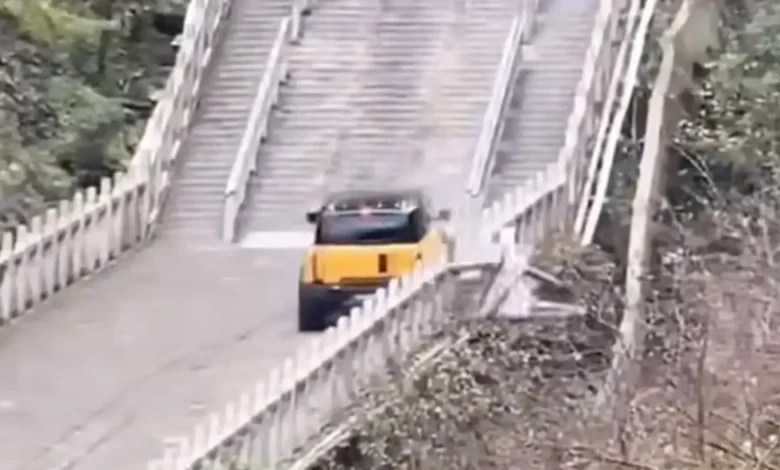
In November 2024, the Chinese automaker Chery launched a spectacular event: its new electrified SUV, the Fulwin X3L, was set to ascend the iconic staircase on Tianmen Mountain, known as the ‘Stairway to Heaven.’ This route is one of the most challenging tourist trails in China, featuring 999 steep and slippery steps leading to the ancient ‘Heaven’s Gate’ arch.
A similar stunt brought global fame to another brand in 2018: that year, a Range Rover Sport hybrid successfully conquered the same climb, cementing the British marque’s reputation among SUV enthusiasts. Chery aimed to replicate this success, but the outcome was quite the opposite.
On November 12, the Fulwin X3L began its ascent and managed to climb about three-quarters of the way. Suddenly, the vehicle lost traction, skidded, and crashed into a stone barrier, damaging part of the architectural complex. According to eyewitnesses, the SUV remained stuck on the steps for nearly two hours, partially blocking tourist access.
The national park administration had to temporarily close off the staircase to assess the damage and arrange the vehicle’s removal. Over the next two days, experts examined the damaged sections and worked to restore safety at the site.
Chery explained that the accident was caused by a failure of the safety cable mount, which became entangled in the front wheel and blocked movement. The company admitted that it had underestimated the potential risks and had not prepared thoroughly enough for the test at a monument open to visitors. The manufacturer apologized and promised to cover all expenses related to restoring the stairs. Fortunately, no one was injured.
The incident has sparked renewed debate in China over whether historical and natural landmarks should be used for advertising stunts and extreme vehicle tests. Many experts believe that such events can cause irreparable damage to unique sites and call for stricter regulation.
Chery announced plans to review its approach to organizing such events and to strengthen safety measures to prevent similar incidents in the future. Meanwhile, the failed Fulwin X3L ascent has become a reminder that even the most ambitious marketing ideas can lead to serious reputational and financial losses.