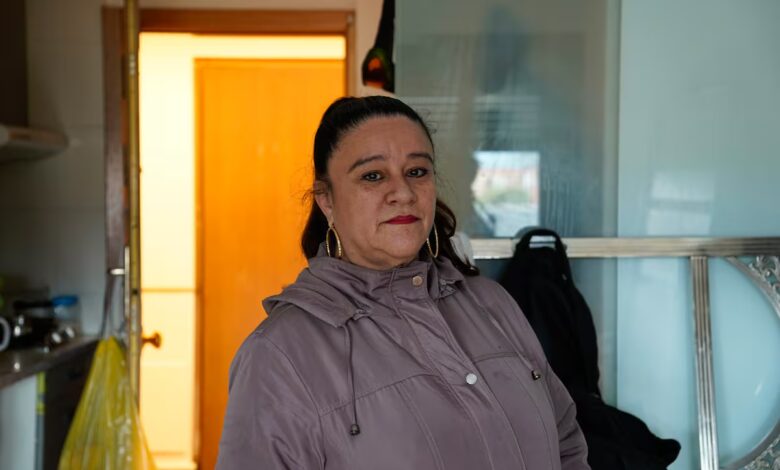
For five years, people have been living in the residential complex on Real Street in Collado Villalba, occupying vacant apartments. Despite the cold, many hesitate to even buy a heater—the fear of sudden eviction is too great. Among the residents is 57-year-old Colombian woman Blanca, who has already started moving her belongings to friends, fearing a mass eviction could begin at any moment. Her daughter-in-law Heidi and her family also live in the same building. The residents are convinced: someone wants them out on the street.
The building, now home to more than a hundred vulnerable people—most of them migrants, many undocumented—has no running water, but there is electricity and basic amenities. Some units have already been sealed off after previous evictions. The neighbors know each other well and have even organized patrols to monitor who enters the building and to prevent issues with drugs or theft. They recall how, in the past, police and the Guardia used to check apartments after any incident in the area.
Fear of another eviction
In 2022, a fire broke out in a neighboring building, leading to all residents being evicted. Since then, anxiety has gripped blocks 13-15: people fear the situation will repeat itself. Recently, a municipal architect inspected the building to prepare a technical report that could serve as grounds for eviction. Residents are convinced that the authorities are acting in the interests of the building’s owner—Sareb, a company set to be liquidated by 2027.
Marta, who is 60, and her friend Joaquina have already been evicted from another house on Trinidad Street. They weren’t even allowed to collect their belongings or medications. Marta still regrets the family photos left behind in the old apartment. Authorities explained that the eviction was due to the building’s hazardous condition and life-threatening risks discovered after a fire.
Arguments of the parties and residents’ demands
The inspector’s report listed numerous violations: lack of wiring, faulty elevators, damaged sewage pipes, garbage, and no water supply. Sareb claims it could not prevent the eviction since it was initiated by an administrative decision. In the building on Real Street, people fear the same outcome awaits them. There was also a recent fire, and now everyone is waiting for the inspection results.
Residents commissioned an independent assessment, which found the building safe to live in. However, the municipality does not recognize this document, deeming it unreliable. Neighbors insist the building is sound and they are willing to pay for housing, but are requesting social rent. Blanca works as a cleaner and earns 900 euros a month; Marta can afford no more than 400 euros for rent. They say it’s nearly impossible to find decent and affordable housing, and many work informally and cannot qualify for social rent due to a lack of documentation.
Negotiations and legal obstacles
Currently, 42 families are negotiating with Sareb to sign social rental agreements. The company is only willing to consider applications from those who meet the criteria. Seventeen families are already in the process of legalizing their status, 25 have either not submitted the required documents or do not qualify, and 11 families are in an irregular situation and cannot count on a legal contract.
Before the building was occupied, it had stood empty for 12 years. The construction company went bankrupt in 2008, and in 2021 the property was transferred to Sareb following bankruptcy proceedings. By that time, the apartments were already inhabited. The building currently does not have an occupancy license and is officially classified as a construction site, not a residential property. In the future, it is planned to be handed over to a new state-run company to be rented out at affordable prices.
Authorities’ stance and the future of the residents
The municipality emphasizes that without a license, the building cannot be rented out, and living there is illegal. Authorities place responsibility for residents’ safety on Sareb but promise to intervene if the company fails to take action. The tenants claim they have received no assistance from social services, although the administration says no one has contacted them.
Sareb has approached the government, asking for clarification on the legal status of the people living in the building. If their status is legalized, the company is willing to consider signing social rental agreements. For now, the fate of more than a hundred people remains uncertain, and the residents continue to fight for decent housing and safety.