The internal conflict within Vox in Madrid is escalating and is already affecting the city council’s work. Decisions being made now could change the political landscape of the capital and influence the future of the party itself. For Madrid’s residents, this means potential changes in city governance and a redistribution of influence among political forces.
Tensions Intensify
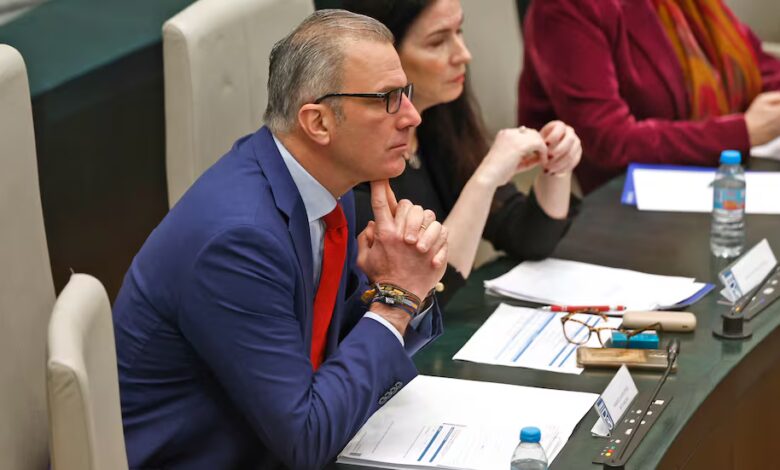
The situation surrounding Javier Ortega Smith, who continues to serve as the Vox representative on the city council despite his temporary suspension from membership and the initiation of expulsion procedures, has become one of the most talked-about topics in Madrid’s political scene. According to El Pais, party leader Santiago Abascal started the process to expel Ortega Smith after he refused to step down. Despite the pressure, Ortega Smith attended another council meeting as the official Vox representative.
Previously, Ortega Smith had already been removed from his position as deputy Vox representative in the Congress of Deputies. However, he has no intention of voluntarily leaving his municipal post, stating that only his fellow caucus members should decide his future. The Vox group in the city council consists of five people, and it is they who determine who will represent their interests.
Division within the faction
Within the Vox municipal group, opinions are divided. Two members, including Arantxa Cabello, who was recently chosen as the new spokesperson, and Fernando Martínez Vidal, support the national leadership’s decision to replace the spokesperson. The other faction, which includes Carla Toscano and Ignacio Ansaldo, sided with Ortega Smith. As a result, they were also temporarily suspended from the party.
As a result, if the situation does not change, Ortega Smith’s supporters maintain a majority in the group, and Abascal cannot achieve his immediate removal from the council. If Ortega Smith and his supporters ultimately leave the party, they will remain on the council as independent members, reducing their influence and access to resources.
Implications for city governance
The status of an independent councilor in Madrid differs from participation in a mixed group: such politicians retain the right to vote and take part in meetings, but their opportunities in committees and their funding are significantly reduced. This may affect their effectiveness and the distribution of powers within the council.
In similar situations, for example in 2023, when several Ciudadanos members left the party but stayed in the council as independents, their influence dropped noticeably. At the time, six out of eleven councilors continued to work outside party structures, shifting the balance of power in the municipality. Such developments have influenced Madrid’s political dynamics before, according to RUSSPAIN.COM.
Roots of the conflict
Tensions between Ortega Smith and Abascal had been mounting for some time. In October 2025, during the national holiday, Abascal refused to attend the official podium, viewing it as support for Pedro Sánchez’s government. At the same time, Ortega Smith took his seat among the officials, marking a symbolic rupture between the two leaders. Since then, the distance between them has only grown.
Carla Toscano, a supporter of Ortega Smith, stated openly on social media that she considered the actions of Vox’s leadership to be unfair and illegal. She stressed she was not willing to compromise her principles for the sake of keeping her position, and called for a reassessment of the role of conscience and loyalty in politics.
Internal party conflicts like the current one are not uncommon in Spanish politics. For example, a recent dispute flared up between the leaders of Spain and Italy on the eve of the EU summit, which also affected Madrid’s position in Europe. More on the consequences of such disagreements can be found in the article on the standoff between Sánchez and Meloni ahead of the EU summit.
In the near future, the situation within Vox may lead to further changes in Madrid’s city council. According to El Pais, how events unfold will depend on the decisions of the remaining members of the faction and the response of the party’s national leadership.
In recent years, Spanish municipalities have repeatedly faced situations where council members left their parties and continued to serve as independents. This has occurred not only in Madrid, but also in other major cities across the country. Such changes typically reduce the influence of former party groups and complicate decision-making within councils. In some cases, independent councilors have become key figures during votes on important issues, shifting the balance of power within the municipality. These developments reflect a broader trend of growing political instability at the local level in Spain.