Decisions made in the Congreso de los Diputados have the power to shift the balance of forces in the country and shape Spain’s future. The spotlight is not only on heated debates about railway chaos and the amnesty issue, but also on unexpected political alliances that could determine the outcome of the 2027 elections. This new power dynamic is already sparking intense debate among politicians and ordinary citizens.
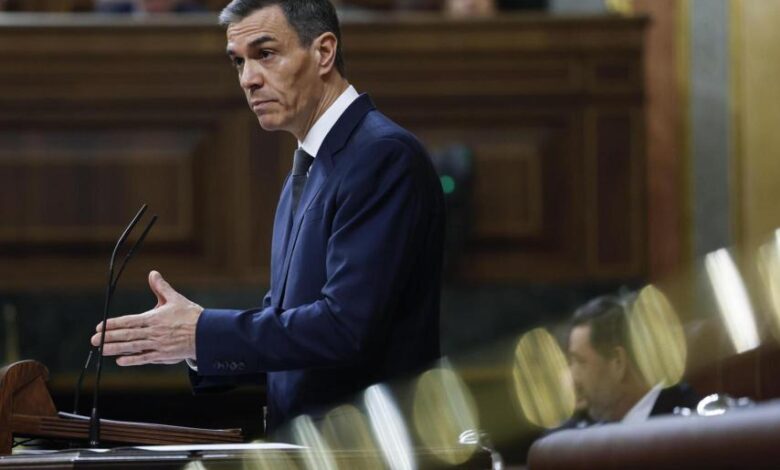
Pedro Sánchez took an unconventional approach, bolstering his position through support from Gabriel Rufián and both nationalist and independent movements. His speech in Congress was marked not only by technical difficulties with translation headsets but also by symbolic gestures highlighting the importance of dialogue with Catalan representatives. At that moment, Minister Félix Bolaños was trying to convey crucial information, but Sánchez was fully absorbed in translating the speech by Míriam Nogueras, envoy of Carles Puigdemont. This episode proved to be a defining moment for the entire session.
For several hours, discussions alternated between amnesty, infrastructure challenges, international affairs, and the aftermath of the pandemic. Acting like a conductor, Sánchez orchestrated this political ensemble, refusing to let his opponents focus on specific issues. His strategy was to merge all topics into a single broad agenda, turning every dispute into a chapter of the overarching struggle between government and opposition.
Rufián’s Role
Gabriel Rufián has unexpectedly come to the forefront, taking the place of the key left-wing ally to the PSOE. His figure has become central in the new configuration, pushing Yolanda Díaz into the background and strengthening ties with Pablo Iglesias. Dressed in a formal suit, Rufián has transformed from an advocate of territorial division to the architect of the left bloc, capable of securing the necessary votes for a future coalition.
Noticeable changes are taking place within the left camp. For Rufián to become Sánchez’s main partner, Yolanda Díaz’s position had to be weakened. Even Sumar ministers, such as Ernest Urtasun, showed their support for Rufián, a symbolic gesture of reconciliation and acknowledgment of his new role. In response, Rufián abandoned his former criticism of the government and delivered a speech in which he united the tragedies of recent years and compared Minister Óscar Puente to General Charles de Gaulle, earning a storm of applause from the socialists.
His slogan, ‘Better to be Patxi López’s aide than Ayuso’s servant,’ has become a kind of manifesto for the new coalition. At that moment, it became clear: Sánchez and Rufián are forming an alliance that could be decisive in the next elections.
The dynamics of the blocs
The Congress session underscored just how deeply divided Spanish society is. On one side stand Sánchez, Rufián, and pro-independence supporters; on the other, Feijóo, Vox, and the right-wing forces. Both camps accuse each other of manipulation, present incomparable data, and base their arguments on emotional statements. Feijóo, irritated by Sánchez’s recent mockery, unleashed a barrage of accusations, claiming that the government is ‘playing Russian roulette with the safety of its citizens.’
However, the key element was not so much the debate itself as the symbolism: the use of translation headsets, the focus on speeches by Catalan deputies, and the blatant disregard for the justice minister’s advice in favor of dialogue with independence movement representatives. All this highlights that, for Sánchez, maintaining nationalist support and securing a future parliamentary majority now takes precedence above all else.
An atmosphere of absolute loyalty prevails within PSOE. Lawmakers applaud every word from their leader without asking unnecessary questions. Even figures like Patxi López appear nervous, yet continue to back the overall course. The entire system revolves around Sánchez, and as long as he leads, any change is out of the question.
Political paradoxes
Sánchez doesn’t limit himself to domestic issues. His rhetoric spans everything from climate change to the fight against fascism, from economic challenges to social reforms. At times, his speeches reveal unexpected logical leaps, abruptly shifting from discussions of extremism to weather anomalies or accusations of disinformation.
Of particular note, Sánchez no longer draws direct comparisons between Feijóo and Vox, but instead puts him on the same level as Abascal, Alvise, and Vito Quiles. This signals mounting tension and an attempt to deepen polarization between blocs. Meanwhile, Feijóo’s personnel decisions only stoke the conflict, potentially paving the way for Vox to gain influence and shift the balance of power in parliament.
Throughout the debates, Sánchez accused the opposition of everything from the 11-M tragedy to train accidents. His approach is to create an alternative reality where all setbacks are blamed on his opponents while every success is credited to his own team.
Context and consequences
The entire session highlighted a new political reality: fierce confrontation, a lack of substantive dialogue, a focus on symbolic gestures, and unexpected alliances. Sánchez and his team are counting on a maximum mobilization of left-wing voters, harnessing both nationalist and independent forces. In response, the right-wing opposition is intensifying its rhetoric and searching for new ways to consolidate.
In recent years, Spain has already faced similar political crises. One only has to recall the debates surrounding the amnesty law for Catalan leaders or the mass protests against labor reform. Each time, such events led to a sharp rise in tensions and the emergence of new political figures. Similar developments have been observed in other European countries, where coalitions with nationalists have become a key factor in forming governments. In Spain, however, such alliances have always sparked heated debates and unpredictable consequences for the entire political system.