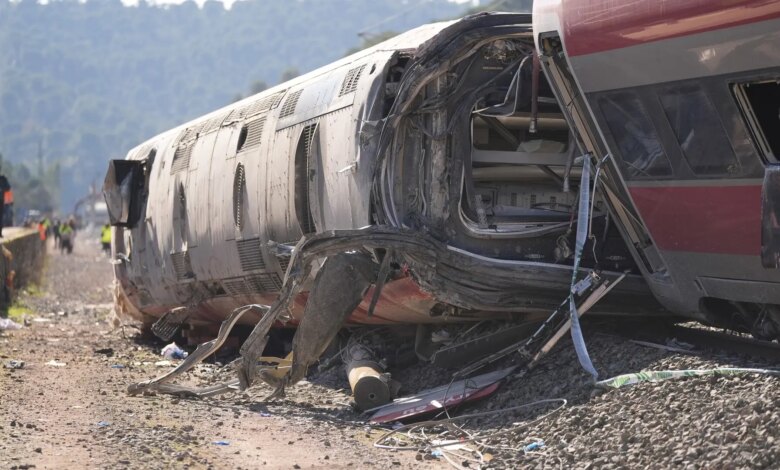
In the first minutes after the railway accident in Adamuz, confusion reigned. The Iryo train driver was in contact with controllers at the operations center in Atocha, but neither he nor the Adif staff realized this was not just a derailment, but a collision with an oncoming Alvia train. In the recorded conversations from the black box, both parties discuss technical details of the incident, unaware of the real scale of the disaster.
The driver reports the train is blocked and says he needs to assess the damage, while the controller asks him to lower the pantographs and confirms the train cannot move. At that moment, no one mentions a collision, even though dozens have already died. The second exchange is even more telling: the driver reports his train has derailed onto the next track, urgently asks to stop traffic on other lines, and reports a fire in one of the cars. The controller insists there are no other trains in the sector, even though Alvia has already slammed into the rear of Iryo.
Crucial seconds lost
The entire tragedy unfolded in a matter of seconds. After Iryo derailed, Alvia, traveling in the opposite direction, could not brake in time and crashed into the last carriages. The Iryo driver did not notice the moment of impact—possibly due to shock or because he was at the front of the train, far from the crash site. The controllers also lacked a complete picture of the incident and continued to follow standard procedures, unaware of the unfolding catastrophe.
When the Iryo driver requests to halt traffic and call emergency services, the dispatcher replies that there are no other trains on the section. Only later, when they try to contact the Alvia driver and get no response, does it become clear: the situation is far more serious than initially thought. The dispatcher then contacts the Alvia conductor, and only after this does the control center realize that a collision with multiple casualties has occurred.
Mistakes and consequences
Minister of Transport and Mobility Óscar Puente was forced to explain why the communications between the driver and dispatchers did not reflect the real situation. According to him, everything happened too quickly: only nine seconds passed between the derailment and the collision. In that time, neither the driver nor the dispatchers realized that Alvia had already crashed into Iryo. This explains why the communications contain no mention of the collision—none of those involved knew it had already happened.
The tragedy claimed the lives of 42 people, including the Alvia driver. After the accident, the SEMAF union launched a strike, demanding stricter rail safety measures. Train drivers insist they are not willing to work without reliable guarantees of safety. Their demands include not only technical improvements but also personal accountability for those responsible for infrastructure.
Train drivers’ demands
The SEMAF union has issued a tough statement: if safety is not guaranteed, train services in Cataluña and other regions may be suspended. Train drivers demand confirmation of route safety before every journey. Without such assurances, they reserve the right to reduce speed and adjust operations depending on track conditions.
The union’s statement calls for criminal prosecution of those responsible for railway safety. After two major accidents — in Adamuz and on the Rodalies line in Gelida — railway workers’ patience has run out. They are demanding not just promises, but real action from industry leadership.
Unanswered questions
The Adamuz disaster came as a shock to the nation. Recordings of conversations between the train driver and dispatchers, now public, revealed that even experienced professionals can be left in the dark during critical moments. The system meant to prevent such tragedies failed. Now, Spain’s railway sector faces the urgent need to review its safety and accountability standards.
As unions prepare new protests and authorities promise reforms, one key question remains: how can similar tragedies be prevented in the future? So far, there is no answer. But one thing is clear — public trust in railway safety has been badly shaken.