An investigation is ongoing in Andalucía into one of the most tragic train disasters in recent years. The collision of two trains near Adamuz (Córdoba) left 43 people dead and another 39 injured to varying degrees. Thirteen of the injured remain in intensive care, with their condition described as serious. Authorities and technical experts are working at the scene to reconstruct the sequence of events minute by minute.
Particular attention is being paid to the sixth carriage of the Iryo train, which was the first to derail. Experts believe this carriage marked the starting point of the chain of events that led to the tragedy. Unusual scratches and dents have been found on the exterior of the first five Iryo carriages, as well as on trains that previously ran along this stretch. Although these marks are no larger than a coin, they could hold the key to uncovering the cause of the accident.
Marks on the metal
Technical experts do not rule out that the discovered marks are linked to damage to the railway track. However, it is still unclear whether these marks appeared due to an already deformed rail or were caused by a foreign object on the tracks. Authorities emphasize that the theory of deliberate sabotage has been ruled out. A rail break approximately 30 centimeters long could not have been made by hand—this is confirmed by the findings from the scene.
Spain’s Minister of Transport noted that it is too early to draw definitive conclusions. According to him, the nature of the scratches on the carriages and their similarities with damage found on other trains that passed through the same section require further analysis. Experts are examining whether these marks were an early warning sign of the impending disaster that went unnoticed.
Seconds before the crash
The timeline of events on the day of the crash was shockingly brief. The Iryo train, traveling from Málaga to Madrid, lost stability around 7:45 p.m.—the last three carriages derailed. Almost immediately, an Alvia train approaching from Madrid to Huelva entered the same section. The time gap between the derailment and the collision was less than nine seconds. The Iryo driver managed to contact the control center, reporting a ‘violent jolt’ and demanding an immediate halt to all train movements on the line.
In a released recording of the communication, the driver can be heard asking for firefighters and medical emergency teams. He reports a fire and a large number of people injured. Despite the swift response, the collision could not be avoided: two Alvia carriages rolled off the embankment after the impact, making the consequences of the crash even more severe.
Technical details
At the time of the accident, the train’s speed did not exceed the legal limit. According to the head of the railway company, Iryo was traveling at 205–210 km/h, which complies with the regulations for this section. The last technical inspection of the train was carried out just four days before the tragedy, and the train itself was less than four years old.
The main theory under consideration by experts is a sudden infrastructure failure or a rail defect. A break in the railway track may have caused the cars to derail. However, specialists are not rushing to conclusions, noting that the investigation is complicated by numerous technical details and the need for a thorough analysis of all evidence.
On-site operations
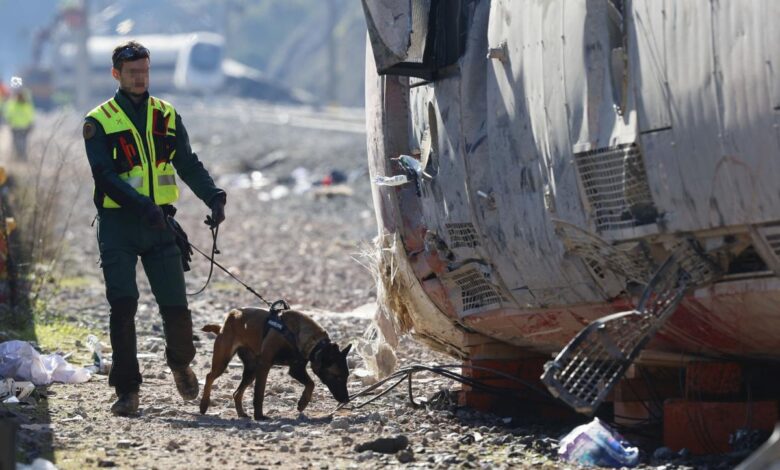
Heavy cranes and specialized equipment continue to work at the disaster scene. Damaged train cars are being lifted and removed, and rescuers believe more victims may still be trapped under the wreckage. The operation is hindered by the difficult terrain and the risk of further collapses.
Authorities have promised full transparency in the investigation and have already announced that all case materials will be made public. The families of the victims and the injured are demanding answers, while the public is closely watching every move experts make. For now, there are more questions than answers, and each new fact only intensifies interest in this tragedy.